
Making sense of mass balance
What is mass balance?
Advanced recycling transforms plastic waste into valuable new products. Plastic and fossil-derived feedstocks are combined and then broken down into smaller molecules to make new raw materials. These raw materials are used to manufacture new products.
When these feedstocks are combined during co-processing, they produce raw materials that are chemically identical. As a result, it’s impossible to distinguish which raw materials are derived from plastic feedstock (recycled material) and which come from fossil-based feedstock. So, how can we determine how much recycled material is produced?
Mass balance is the method that makes this possible. It ensures that the amount of recycled material produced from the plastic feedstock is accurately determined and accounted for, even if we can’t track each molecule. Simply put, it makes sure the recycled material generated through the process can be accurately attributed to certain products that come out.
FREE ATTRIBUTION
How does mass balance work
Mass balance verifies how much recycled material is produced through our operations. Based on that amount, a corresponding number of credits is generated. The mass balance approach used determines how those credits may be allocated to products. A flexible approach known as free attribution allows all available credits to be allocated to specific products.
We use a globally recognized mass balance framework that incorporates a free attribution approach to ensure all plastic inputs, recycled material outputs, and associated credits are accurately accounted for—even if those exact molecules are not physically present in the end product.

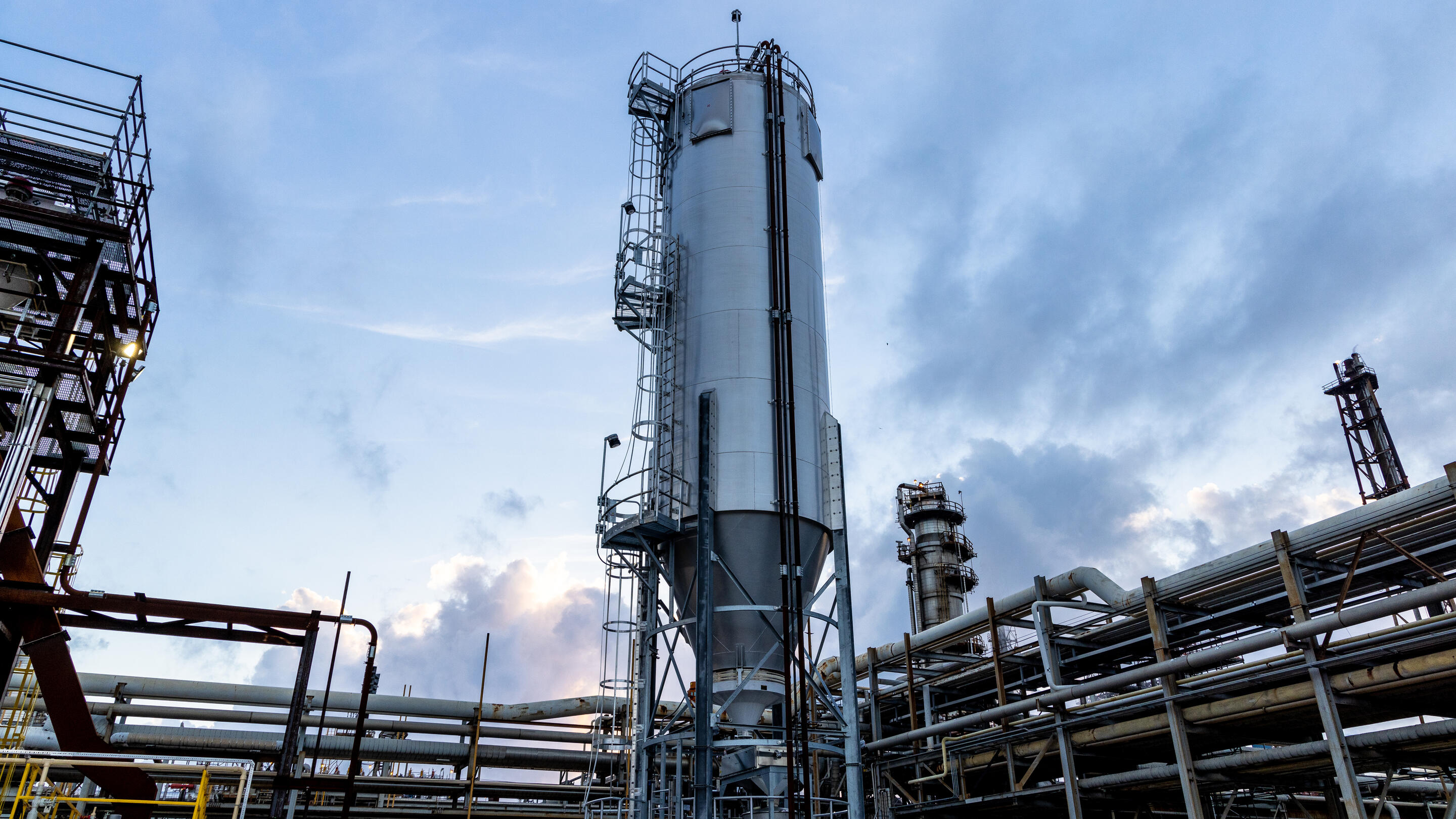
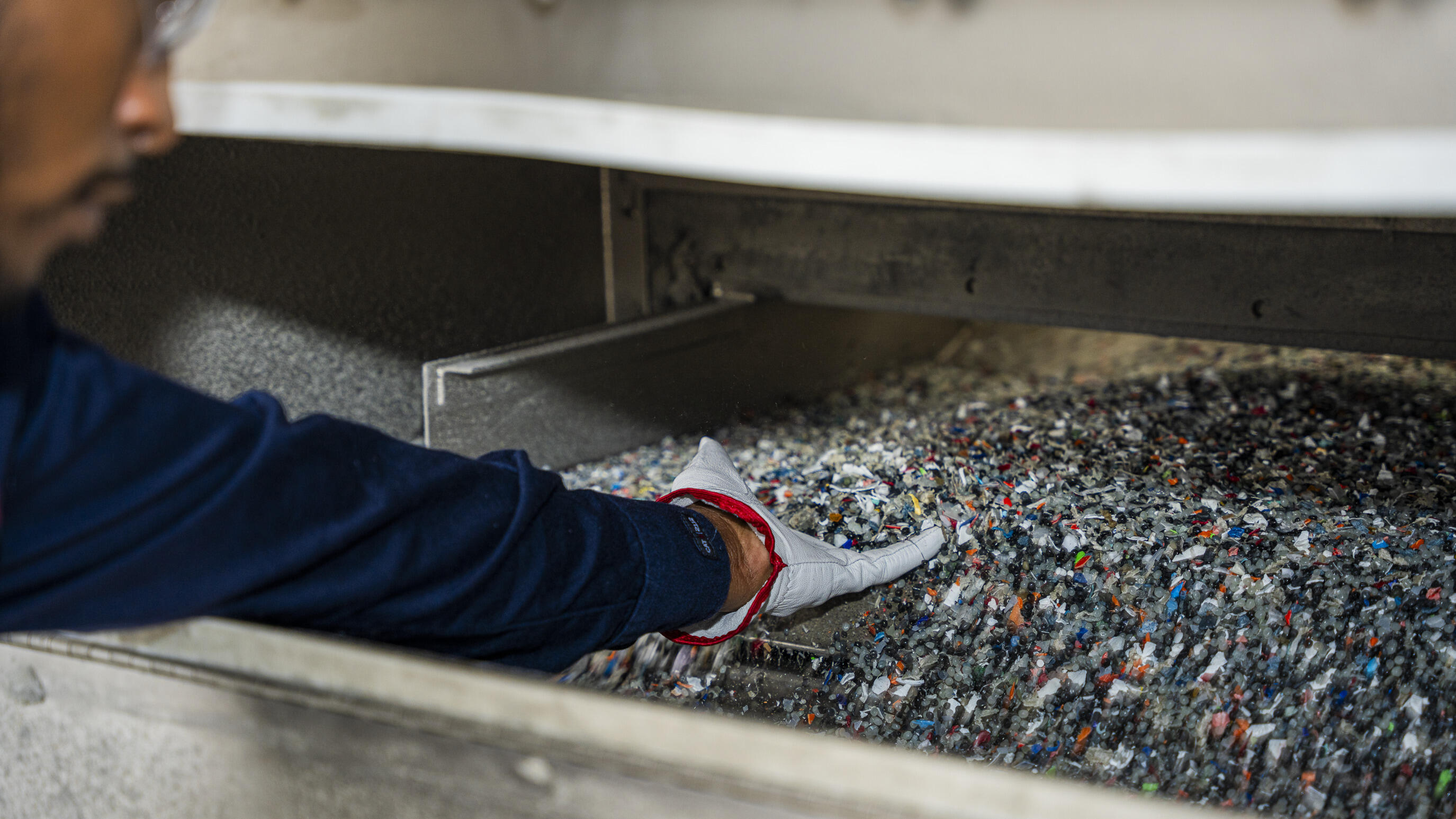
Plastic feedstock we process at our advanced recycling units in Baytown, Texas.
Similar accounting methods
Mass balance and similar accounting systems have been used for decades in industries where inputs are tracked and allocated across complex production systems.
-
Renewable energy
A good analogy is the accounting process used when purchasing renewable energy. When you buy wind or solar power, an equal amount of renewable energy is added to the power grid. Yet, the electricity that reaches your home or office may still come from a mix of energy sources, since all power flows through the same grid. What matters is that the amount of renewable energy you buy matches what is added to the grid—regardless of how the electricity is ultimately used. -
The cocoa industry
In cocoa production, certified sustainable cocoa beans are often mixed with conventional beans during processing, so they may not physically appear in every chocolate bar labeled as “certified.” However, through mass balance, the amount of certified cocoa beans purchased is matched to the amount sold as “certified” or “sustainable”.




We apply this same proven approach to plastic waste.
In advanced recycling, breaking down plastic feedstocks into smaller molecules is the moment recycling happens. These molecules can be used in place of those from fossil-derived feedstocks to make many valuable products, such as fuels, lubricants, chemicals, and new plastics. Regardless of the end use the result is the same: more plastic waste is diverted from landfills and incineration and transformed into a new product.
Unlocking full-scale advanced recycling
Mass balance with free attribution is essential to unleash full-scale advanced recycling while maintaining clear accountability and verified claims.
The mass balance approach we and other companies use is certified through International Sustainability & Carbon Certification (ISCC) PLUS. It’s a globally recognized certification system that verifies the traceability of plastic feedstocks and the accounting of recycled materials through the supply chain—providing confidence and transparency in our recycling claims.
To accelerate advanced recycling globally, society needs big solutions that help process more plastics after their first use. That’s why flexible policies that recognize the mass balance approach are critical.
NEW STUDY
Advanced recycling: Insights from American consumers
A recent study reveals that nearly 8 out of 10 Americans who consider recycling when making purchasing decisions agree that mass balance in advanced recycling is an appropriate basis for labeling recycled content. But today’s recycling rules are inconsistent and confusing. It’s time for policymakers to align federal rules with positions Americans already support.
Download one-page with key takeaways
8 out of 10
Nearly 8 out of 10 Americans agree that mass balance in advanced recycling is an appropriate basis for labeling recycled content.1
Advanced Recycling
Explore more

Aligning EU policy with innovation: the case for chemical recycling
Article
•
3 min read

Goal! Circularity progress for Houston
Viewpoints
•
3 min read
Baytown becoming one of the largest advanced recycling operations in the world
Article
•
2 min read

New research shows how popular plastic packaging compares to alternative materials
Article
•
3 min read

EPA Administrator Lee Zeldin tours our advanced recycling operations in Baytown
Article
•
2 min read
FOOTNOTES:
- The survey described the core concept of mass balance accounting, labeling outputs in proportion to inputs when an output cannot be traced to a specific input, as it applied to three examples. Respondents were asked how appropriate the approach is for marketing/labeling recycled content or renewable energy. A substantial majority of the intended respondents (79.0 percent) believed that a mass balance approach to labeling recycled content when plastic waste is mixed with raw materials from fossil fuels was completely or somewhat appropriate.