
Article
3 min read
• Dec. 12, 2025New research shows how popular plastic packaging compares to alternative materials
- We commissioned two peer-reviewed studies known as Life Cycle Assessments (LCAs) that examine the potential environmental impacts of the most common form of plastic packaging, polyethylene (PE).
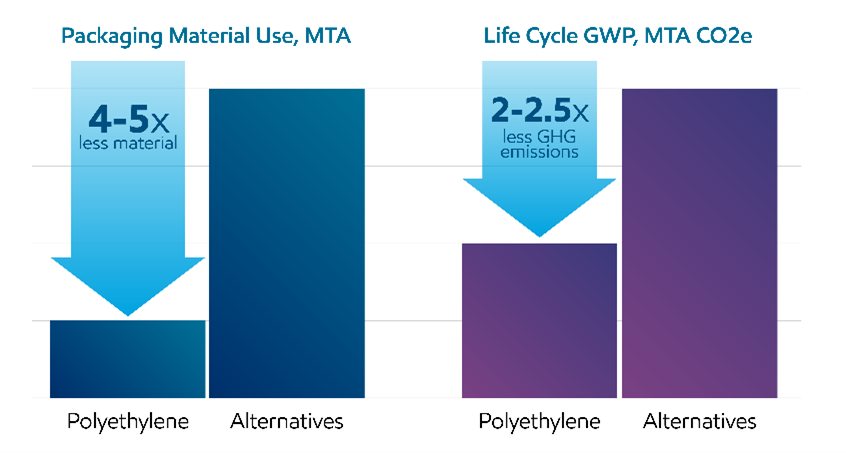
- When aggregated, PE packaging required 4 to 5 times less material than alternatives studied.
- Across its life, PE packaging typically has half the GHG emissions than the alternatives studied.
Article
3 min read
• Dec. 12, 2025Navigate to:
Plastic – it makes modern life possible. Plastic products help defend against disease, preserve food, and are used in medical equipment that saves lives. Plastic is not just effective, it’s also more affordable. Compared to substitutes, we estimate that plastic costs up to 45% less.1
But how does this necessary material stack up against alternative materials when it comes to the environmental impacts?
To better understand this, we commissioned two peer-reviewed studies known as Life Cycle Assessments (LCAs) that examine the potential environmental impacts of the most common form of plastic packaging, polyethylene (PE), and other commonly used packaging materials, like metal, glass, and paper. These LCAs studied everyday items like produce bags, fertilizer bags, and personal care bottles.
LCAs are useful tools that can shed light on environmental impacts across the life cycle of materials or products, from the time materials are made and transported all the way to when they are disposed.
This kind of information is helpful for regulators, policymakers, and companies like ours to better understand the environmental impacts of various materials and inform their choices on what materials to use.
Here are some of the key takeaways of how PE packaging compares to the alternative materials studied:
Lower weight and packaging material use
- When aggregated, PE packaging required 4 to 5 times less material than alternatives studied. This leads to significant cost savings and environmental benefits in transporting products.
Lower GHG emissions
- Across its life, PE packaging typically has half the GHG emissions than the alternatives studied.
These recent LCAs are among the most comprehensive of their kind, studying two thirds of the PE packaging markets in the U.S. and Europe. They are the first published LCAs to focus exclusively on PE packaging and compare them to the non-plastic alternatives of metal, glass, and paper.
These studies didn’t just examine GHG emissions – they also looked at other environmental impacts like fossil resource use and water scarcity and found that PE packaging used less fossil resources and can reduce water scarcity in approximately 50% or more of the cases compared.
The U.S. study was published in Science of the Total Environment in collaboration with Trayak. The European study was published in Cleaner Environmental Systems and was led by the University of Applied Sciences Vienna and Circular Analytics TK GmBH. Both studies were conducted in collaboration with Michigan State University’s School of Packaging.
LCAs help us better understand the products we rely upon, and they help us make informed decisions about the materials we use. Plastics in general are more affordable and can offer lower environmental impacts than alternatives as these and other studies show.
Materials for modern living
Creating innovative solutions that make modern life possible
Explore more

Goal! Circularity progress for Houston
Viewpoints
•
3 min read
• June 25, 2026
Baytown becoming one of the largest advanced recycling operations in the world
Article
•
2 min read
• Feb. 2, 2026
EPA Administrator Lee Zeldin tours our advanced recycling operations in Baytown
Article
•
2 min read
• Nov. 17, 2025
Doubling down on double capacity: our second advanced recycling unit is up and running in Baytown!
Article
•
2 min read
• June 26, 2025
ExxonMobil to expand advanced recycling capacity
News releases
•
4 min read
• Nov. 21, 2024
Addressing plastic waste with chemical recycling
Article
•
2 min read
• Sept. 25, 2024FOOTNOTES:
- Based on ExxonMobil analysis of data included in Breaking the Plastic Wave: A Comprehensive Assessment of Pathways Towards Stopping Ocean Plastic Pollution (Pew Charitable Trusts and SYSTEMIQ, 2020).