
Advanced Recycling
Advanced recycling: A different way to handle used plastics
Only 9% of plastics are recycled globally, according to the Organization for Economic Co-operation and Development (OECD). How can the world improve that rate while supporting a more circular economy for plastics?
While the first step in improving recycling rates needs to be investment in municipal collecting and sorting, advanced recycling can help by complementing traditional recycling methods.
Traditional mechanical recycling is an excellent way to recycle clean plastics of a single type, like water bottles. However, it has difficulty removing oils, grease or food waste from the used plastic, so many food and oil-based product containers are discarded, usually to a landfill.
Mechanical recycling also can’t process packaging with multiple layers of different types of plastics and other materials. For example, a chip bag may have a plastic outer layer and an aluminum inner layer. Traditional machines can’t separate this combination effectively.
Advanced recycling solves these issues by breaking down materials to their molecular level. These molecules then become the raw materials used to make fuels, lubricants, brand-new plastics and other valuable products. The process allows a wider variety of plastics to be recycled – chip bags, motor oil bottles, artificial turf and more.
Advanced recycling can help society recycle a greater share of the products we use every day. It’s a solution that can improve recycling rates for plastic waste and support a more circular economy. And it can be scaled and replicated around the world to increase the amount of plastic material that can be made into new products.
Here’s how it works.
Recycling collection
Plastics like chip bags, bubble wrap, and grocery bags are difficult to recycle because they can be contaminated or made from mixed materials that are hard to separate. As a result, most end up in landfills—but advanced recycling is changing that by making more plastics recyclable.
Sorting & processing
Instead of going to landfill, these hard-to-recycle plastics are sorted, shredded, and processed before being sent to our advanced recycling facilities.
Transforming plastic waste
Once at our facility, the plastics are broken down into basic molecules to make new products. Our advanced recycling units at our Baytown facility have the capacity to process up to ~250 million pounds of plastic waste each year.
Making everyday essentials
Advanced recycling gives plastic waste a new life as valuable products used every day—from fuels and lubricants to high performance chemicals and plastics.
Newsroom
Stay up to date with the latest news and information
Explore more

Goal! Circularity progress for Houston
Viewpoints
•
3 min read
• June 25, 2026
Driving progress: Our roadmap to delivering advanced synthetic graphite at scale
Article
•
2 min read
• Feb. 20, 2026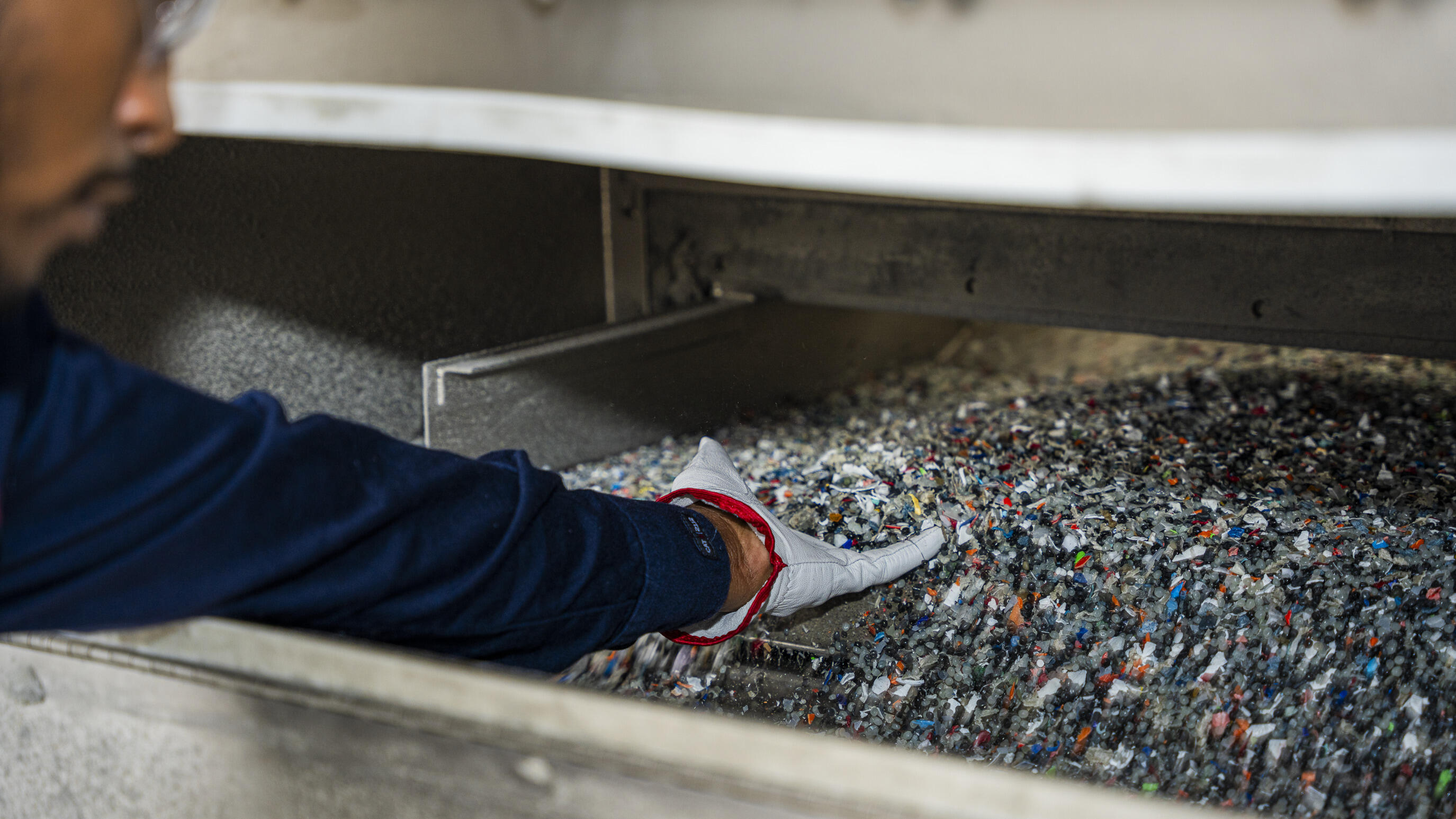
Baytown becoming one of the largest advanced recycling operations in the world
Article
•
2 min read
• Feb. 2, 2026
New research shows how popular plastic packaging compares to alternative materials
Article
•
3 min read
• Dec. 12, 2025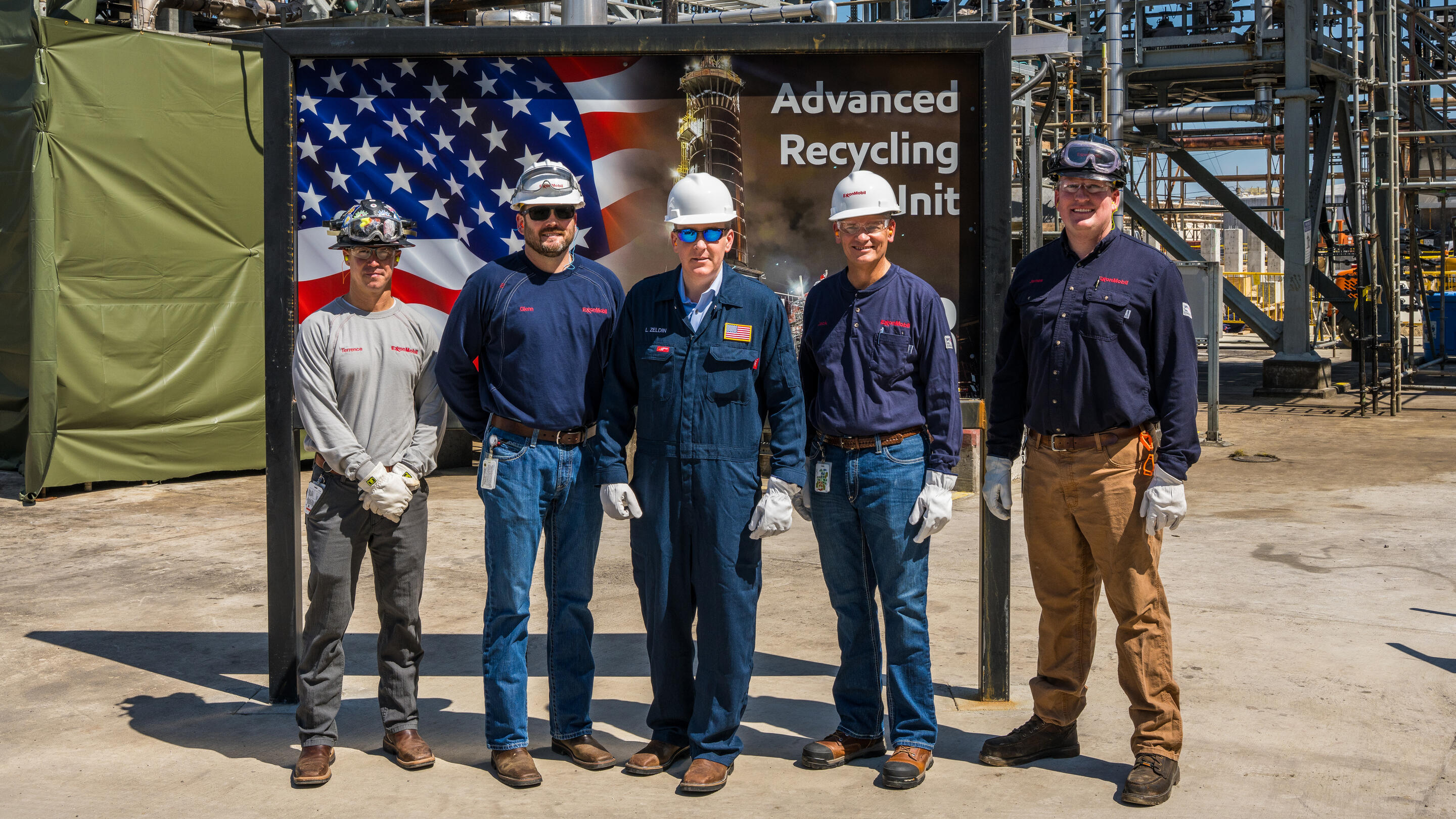
EPA Administrator Lee Zeldin tours our advanced recycling operations in Baytown
Article
•
2 min read
• Nov. 17, 2025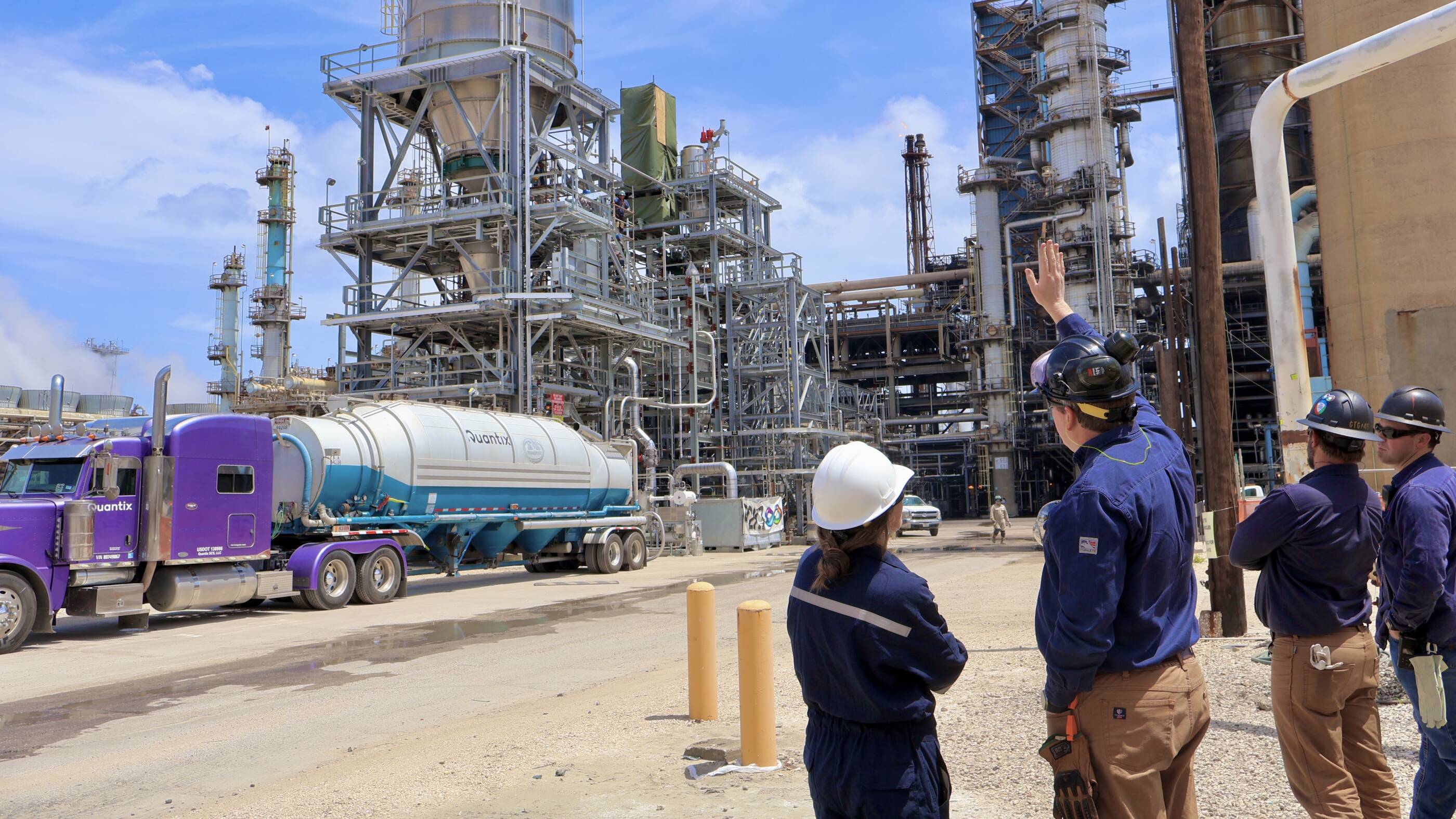
Doubling down on double capacity: our second advanced recycling unit is up and running in Baytown!
Article
•
2 min read
• June 26, 2025