
Myth vs. reality: what advanced recycling really does
Navigate to:
Advanced recycling – myth vs. reality
Plastics are essential to our daily lives. From life-saving medical products, to our phones that keep us connected, to the cars we drive; they are present in almost everything. But not all plastics are recycled. In fact, less than 10% are recycled today.1
Advanced recycling can help solve this issue.
Advanced recycling breaks down plastic waste at the molecular level to manufacture new products like fuels, lubricants, chemicals, and plastics. Expanding advanced recycling can allow us to recycle more plastics. And smart federal policy can help us achieve this goal on an industrial scale.
Advanced recycling should be something we can all support. So, let’s clear up some common misconceptions about advanced recycling:
Myth: Advanced recycling is not a viable solution to address today’s plastic waste challenge.
Fact: Advanced recycling is a commercially viable and scalable solution already in use today.
ExxonMobil is paving the way for America’s leadership in advanced recycling to produce essential materials. Since its launch in 2022, our Baytown complex's advanced recycling units alone have processed over approximately 150 million pounds of recovered plastics that would likely have otherwise ended up in American landfills or incinerators. These plastics are transformed into a range of valuable new products, boosting American manufacturing.
Myth: Advanced recycling is just a ploy for industry to sell more plastics.
Fact: Plastics are essential to daily life, and demand is only growing. Plastic is an effective and affordable material, and can offer certain environmental benefits over alternative materials in many applications.2 We produce plastic because it is a critical material that society demands. But plastic waste must be addressed. Advanced recycling is our contribution to help address this challenge.
However, there is more to be done to support advanced recycling. If U.S. policymakers modernize laws to support technology-neutral solutions that can leverage existing infrastructure, the U.S. can bring full-scale advanced recycling to American manufacturing, lead in plastic waste reduction, create tens of thousands of jobs, and spur billions in economic growth.3
Myth: Mechanical recycling is the only solution needed to solve the plastic waste problem; we just need to build out the infrastructure.
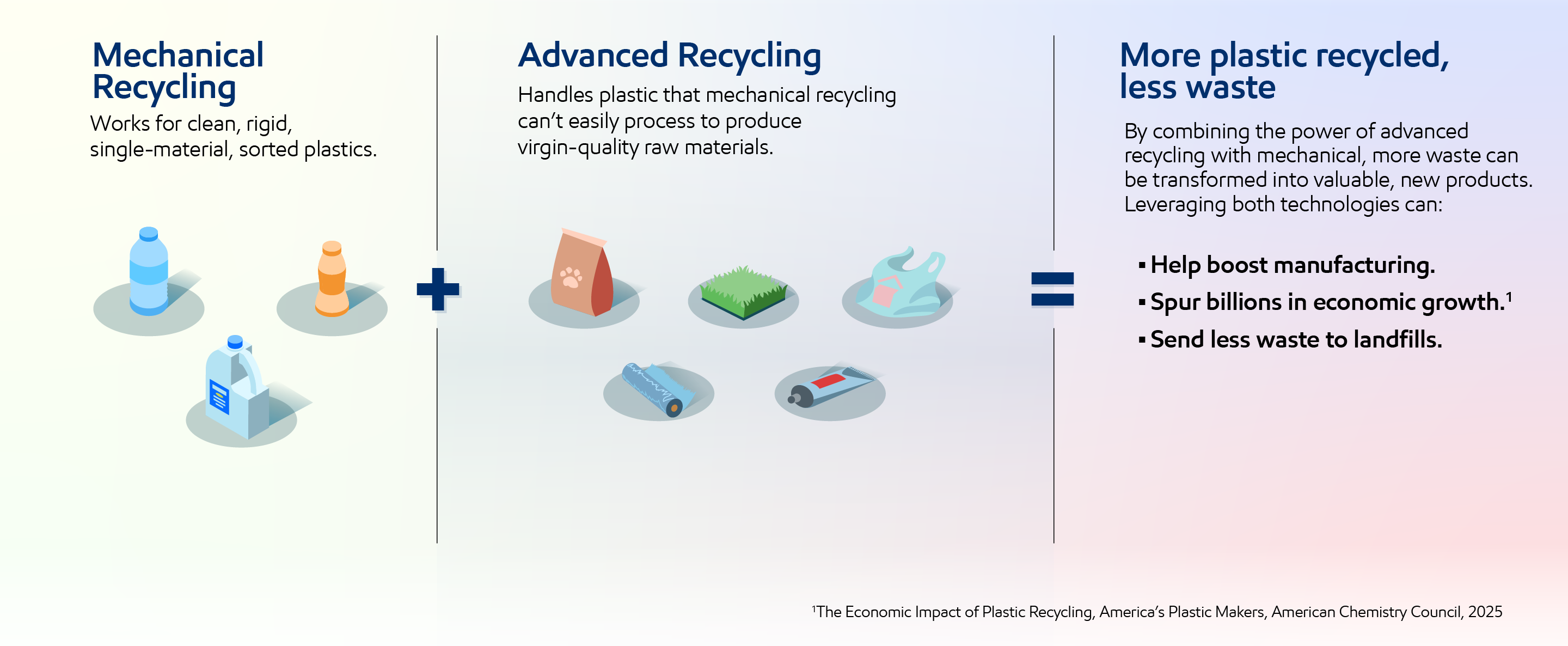
Fact: When most people think of recycling, they think of mechanical recycling. It’s an important part of the recycling ecosystem, but it can only do so much. The technology is limited to clean, single-material, sorted plastics, like water bottles.
Advanced recycling can handle a broader range of plastic materials. For example, a potato chip bag may have a plastic outer layer and an aluminum inner layer. Advanced recycling can separate this combination of materials effectively by breaking down plastics that mechanical recycling cannot, turning them into high-quality building blocks to create new products.
To expand the range of plastics that can be recycled, policy must allow for advanced recycling to work with mechanical recycling as a complementary solution.
Myth: Advanced recycling is not properly regulated.
Fact: Advanced recycling facilities are subject to robust federal and state environmental regulations. At the federal level, these facilities operate under the oversight of the U.S. Environmental Protection Agency (EPA) and must comply with applicable Clean Air Act, Clean Water Act, and Resource Conservation and Recovery Act (RCRA) requirements, among others. Our advanced recycling units are some of the most regulated manufacturing processes, particularly in the United States and Europe.
Myth: Advanced Recycling is the same as incineration.
Fact: Incineration burns plastic. Advanced recycling does not.
Opponents of advanced recycling use words like “incineration” or “burning” to create imagery of black smoke rising from smokestacks. Nothing could be further from the truth.
Here’s the difference: From a practical standpoint, incineration is just burning trash to reduce what goes to landfill. In some countries, they incinerate plastic to create heat or power a turbine for the electrical grid. On the other hand, advanced recycling converts plastic waste into new molecules.
For the scientists, there is also a technical distinction. Advanced recycling applies heat without oxygen to break plastic down into its molecular building blocks so they can be used to make new products. Incineration burns plastic, wasting the valuable molecules that could otherwise be reused.
Myth: There is no need to modernize U.S. federal policy for advanced recycling.
Fact: Advanced recycling is bolstering American manufacturing by expanding the range of raw materials to make critical products, but the policy environment has not kept pace.
Inconsistent recycling definitions, outdated rules, and patchwork state laws are slowing private investment and limiting the potential of advanced recycling. A federal standard would give consumers clarity and increase trust in environmental claims. Without it, states will be forced to create their own definitions, leading to conflicting rules that discourage investment and confuse consumers.
This is why policymakers must officially designate advanced recycling as a legitimate form of recycling in federal laws and regulations and establish a clear and enforceable national standard for recycled content claims. This will ensure legal certainty, grow the long-term contributions of this technology to our economy, and help address plastic waste.
Advanced recycling is a viable, in-demand technological solution to the plastic waste challenge. To help realize its full-scale potential, we need modern policies to help keep more plastics out of landfills, scale up recycling capacity, and unlock investment in U.S. manufacturing.
Myth: ExxonMobil is only moving forward with advanced recycling to benefit from government subsidies and tax incentives.
Fact: ExxonMobil is not using or pursuing tax incentives in support of advanced recycling. Advanced recycling is already happening. The technology is commercially viable, and we are expanding operations due to customer demand.
But effective policy is needed to bring this technology to American manufacturing at an industrial scale. It’s not just the industry who would like to expand these recycling efforts. There is also a growing demand from consumers and customers for more recycling opportunities, with 87% of Americans believing industry and government should do more to support all types of recycling, including advanced recycling.4
Mechanical Recycling + Advanced Recycling = Unlocking Tomorrow's Resource
Together, mechanical and advanced recycling widen the range of plastics that can be recycled. By picking up where mechanical recycling stops, advanced recycling technologies help turn today's waste into tomorrow's resource.
Download the infographic
Advanced Recycling
How waste today becomes value tomorrow
Explore more

Goal! Circularity progress for Houston
Viewpoints
•
3 min read
• June 25, 2026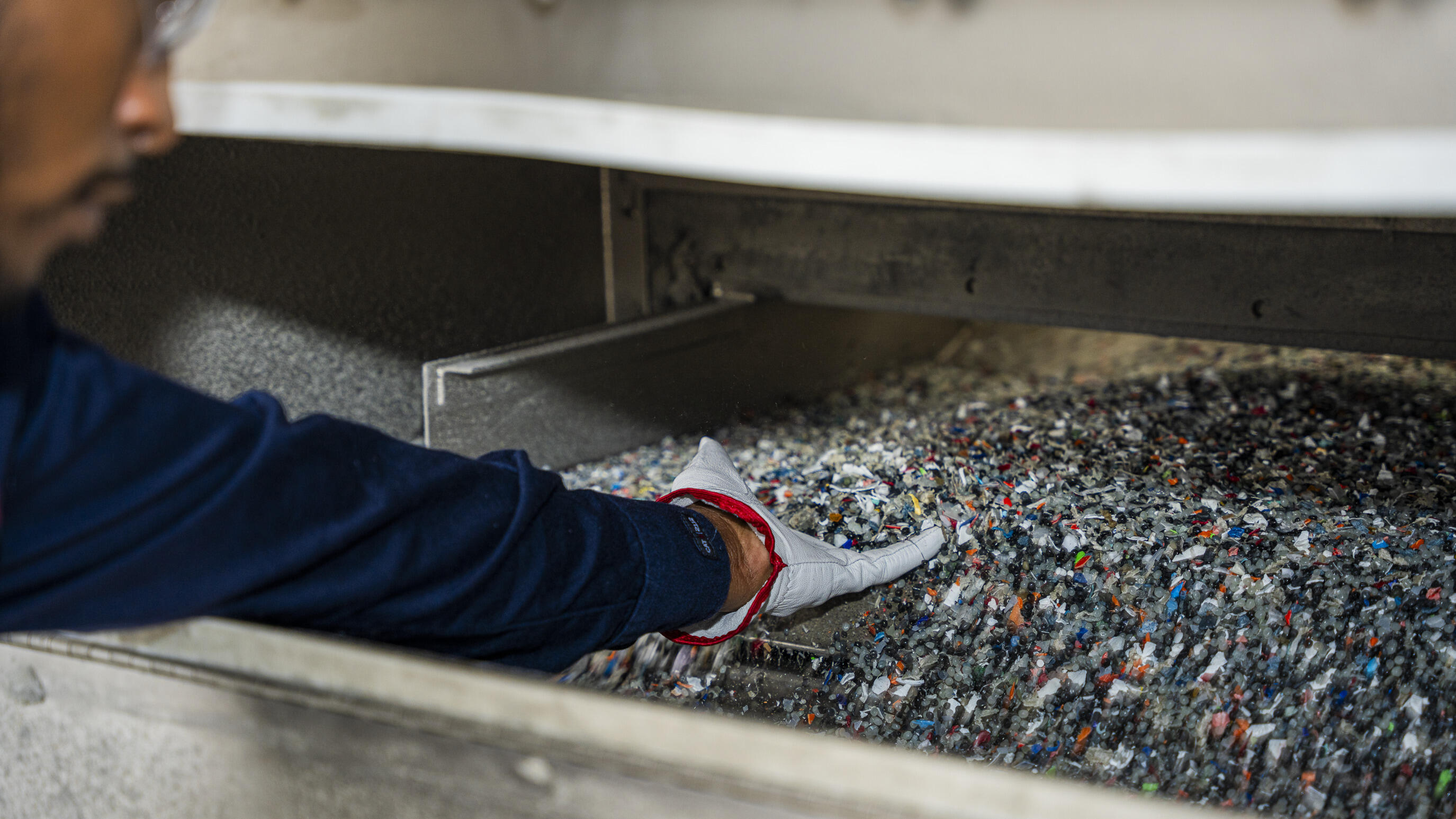
Baytown becoming one of the largest advanced recycling operations in the world
Article
•
2 min read
• Feb. 2, 2026
New research shows how popular plastic packaging compares to alternative materials
Article
•
3 min read
• Dec. 12, 2025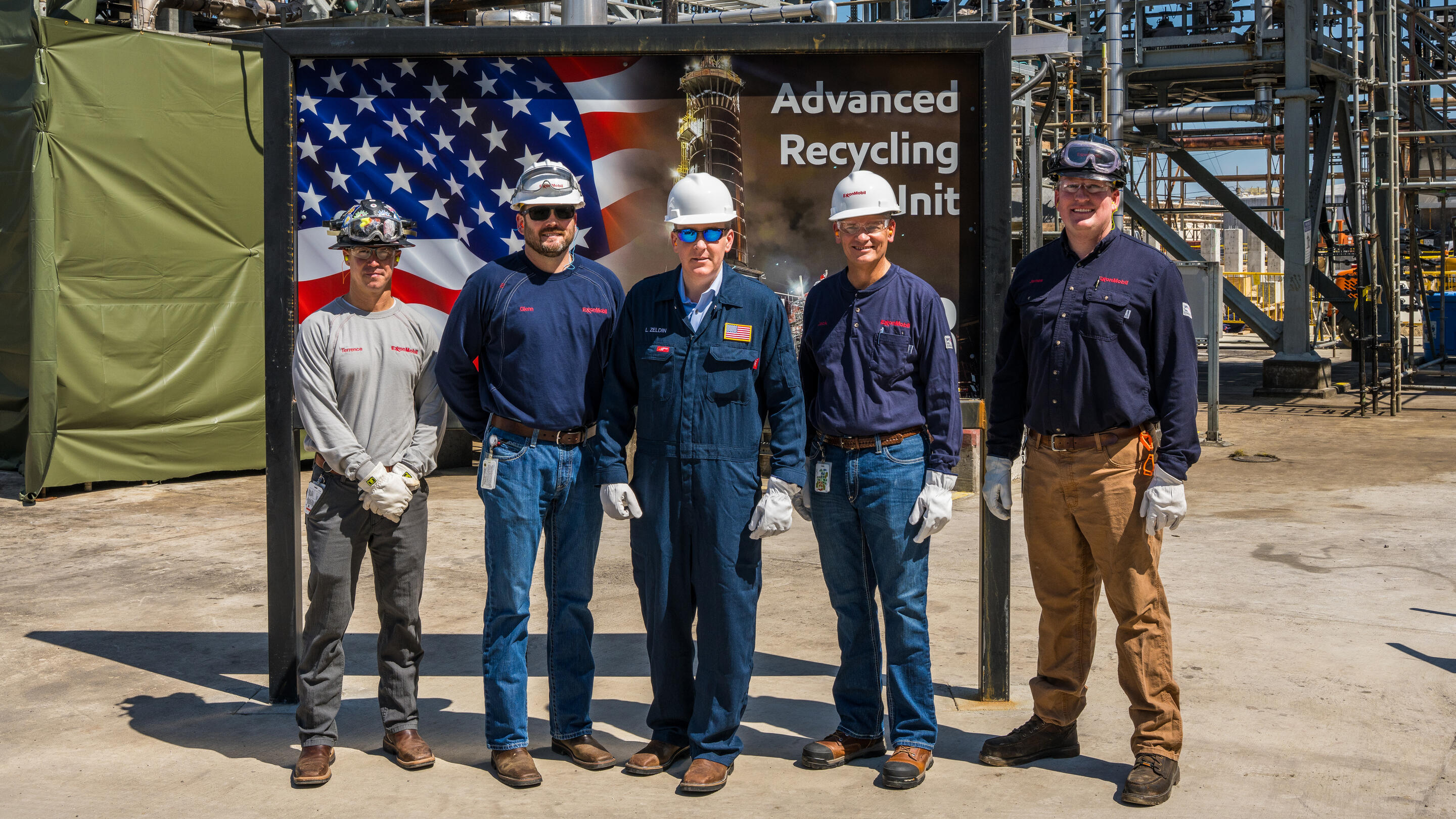
EPA Administrator Lee Zeldin tours our advanced recycling operations in Baytown
Article
•
2 min read
• Nov. 17, 2025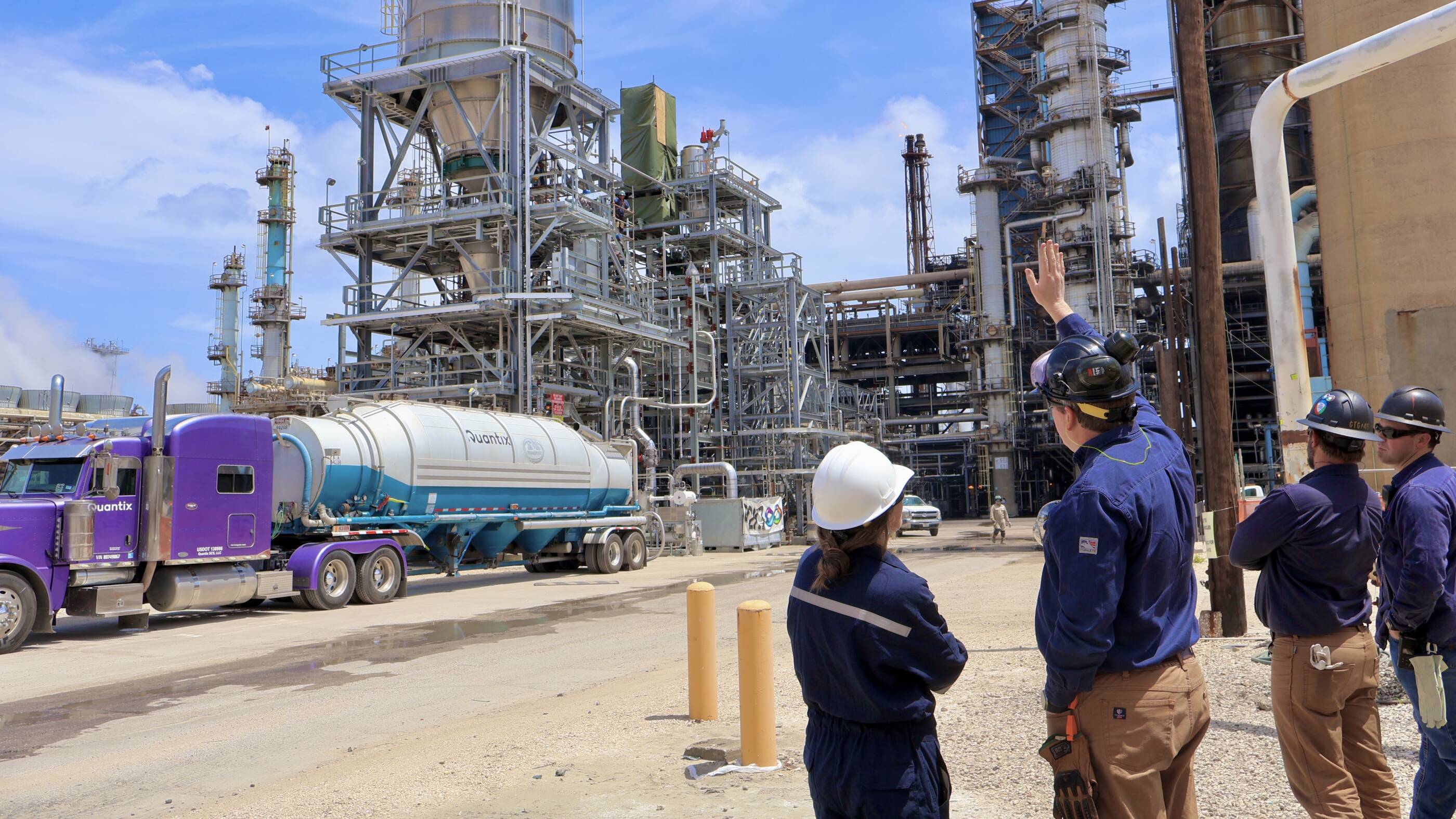
Doubling down on double capacity: our second advanced recycling unit is up and running in Baytown!
Article
•
2 min read
• June 26, 2025
ExxonMobil to expand advanced recycling capacity
News releases
•
4 min read
• Nov. 21, 2024FOOTNOTES:
- Based on OECD Global Plastics Outlook: https://www.oecd.org/content/dam/oecd/en/publications/reports/2022/02/global-plastics-outlook_a653d1c9/de747aef-en.pdf.
- ExxonMobil – “How popular plastic packaging compares to alternative materials”.
- The Economic Impact of Plastics, Recycling, America’s Plastic Makers, American Chemistry Council, 2025: https://plasticmakers.org/wp-content/uploads/2025/10/Analysis_Economic-Impact-of-Plastics-Recycling.pdf.
- Plastics Industry Association, “Survey: Consumers Overwhelmingly Support All Types of Recycling,” available at: https://www.plasticsindustry.org/newsroom/plastics-survey-consumers-overwhelmingly-support-all-types-of-recycling/.