News
3 min read
• Aug. 10, 2026The sweetest support: Empowering Malaysian women through beekeeping
- We have been working with a Malaysian royal foundation to develop community support programs in the country.
- We are backing a program teaching local women in Malaysia’s Terengganu state how to raise native stingless bees and harvest honey.
- This is helping to empower women and give them financial freedom, as they sell the honey and provide it to universities to study its anti-cancer properties.
News
3 min read
• Aug. 10, 2026Navigate to:
Most people are looking for the sweet life, and with our support, Nor Haidiah binti Che Romeli is making it a reality.
In Terengganu, a community program run by the royal foundation Yayasan DiRaja Sultan Mizan (YDSM) and supported by our team in Malaysia proved to be the answer to her prayers. The initiative use beekeeping to economically empower, teaching them how to earn money by harvesting honey from native stingless kelulut bees.
From A to Bee, financially
For Haidiah, joining the program was a life-changing decision that gave her the power to shape her own future.
“Before I had this opportunity to raise bees, I was a substitute teacher,” Haidiah explains, “but after my husband quit working as a mariner to find a job closer to home, I decided to look for new options to support our family and found this kelulut program and we went 100% on it, it was what we needed.”
She generates income through selling the honey and is considering expanding into honey and propolis-based products.
“Kelulut honey farming isn't difficult,” she adds. “It doesn't require a large area, as long as the environment is suitable and there are plenty of food sources for the bees. It can be a side income for anyone who wants to strengthen their finances, even on a small scale, by making use of the space around the house.”
Why bees?
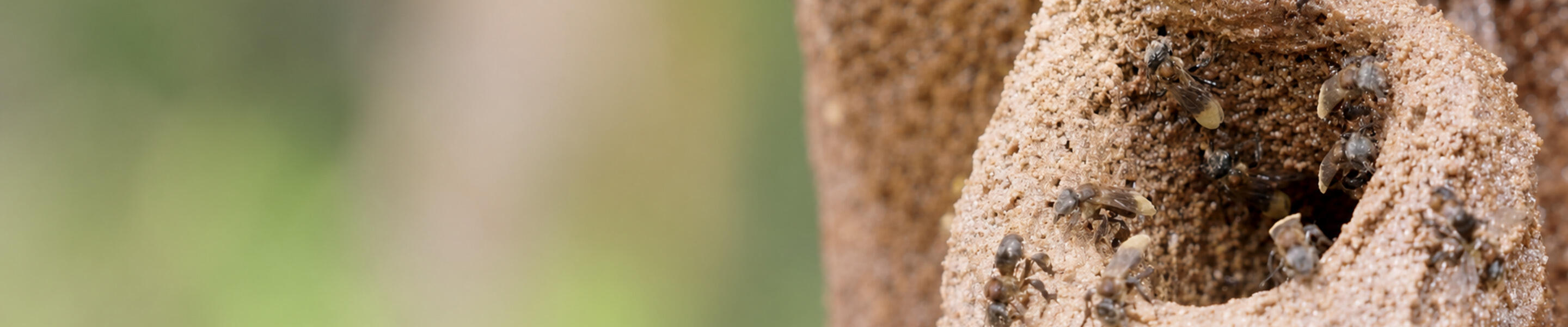
The stingless bees, native to Malaysia’s tropical forests, are different to most bees. Apart from being stingless, they only produce a small amount of honey each year, from pollen collected from a wide array of local flora. Unlike regular beekeeping, there is also no need to pacify the bees or wear protective clothing, reducing initial investment costs.
Beyond providing direct income for local women, the program is also unlocking scientific breakthroughs. Local university researchers and neuroscientists are exploring the honey’s potential as a medical superfood, including its use in wound healing. Thanks to its rich antioxidant profile and unique trehalulose sugar, kelulut honey is also being studied for its chemopreventive properties that could help reduce the risk of cancer.
A hive of community growth
YDSM board of trustees member, Dato' Mohd Fadzli bin Yusof, explained that the program is part of his group’s goal to improve lives in the region, backed by ExxonMobil.
“Our objective is to help those who are really marginalized. Through the program we hope to help these people lift their family income.
“Yayasan is very honored and very proud to have the opportunity to work with ExxonMobil to develop and operate programs and initiatives that can help change the lives of families, particularly in Terengganu.”
Haidiah is also giving back, teaching other women how to build their own futures through beekeeping.
“I also teach others the basics of beekeeping, giving them an introduction to beekeeping, colony relocation, and propagation. It gives women an opportunity to increase their income and become more financially independent.”
Across Malaysia and throughout Asia, we’re helping improve lives by empowering people and providing them with the products and skills they need for modern life.
Empowering Malaysian women through beekeeping (0:52).
Explore more

Empowering Terengganu's next generation of innovators through STEM
News
•
2 min read
Unleashing the power of open data
News
•
3 min read

Faizah Mohd Noor: Cultivating careers and curiosity through STEM
News
•
3 min read

Digital minds, global solutions: KLTC’s virtual way of working
News
•
2 min read
Global engineering talent in the heart of Malaysia
News
•
3 min read