Article
2 min read
• Aug. 7, 2026The Carbon Superhighway: Rethinking how CO2 moves at scale
Article
2 min read
• Aug. 7, 2026Navigate to:
Carbon capture is becoming an increasingly important part of industrial operations, but capture alone doesn’t solve the problem of high emissions. What matters next is how CO2 is transported, used, and stored. As captured volumes increase and customer needs vary, the limits of traditional carbon capture and storage (CCS) models become clearer.
Most systems today are built as point-to-point connections: one facility, one destination. While that approach is straightforward, it doesn’t scale easily and it offers little flexibility as new projects and end-uses emerge.
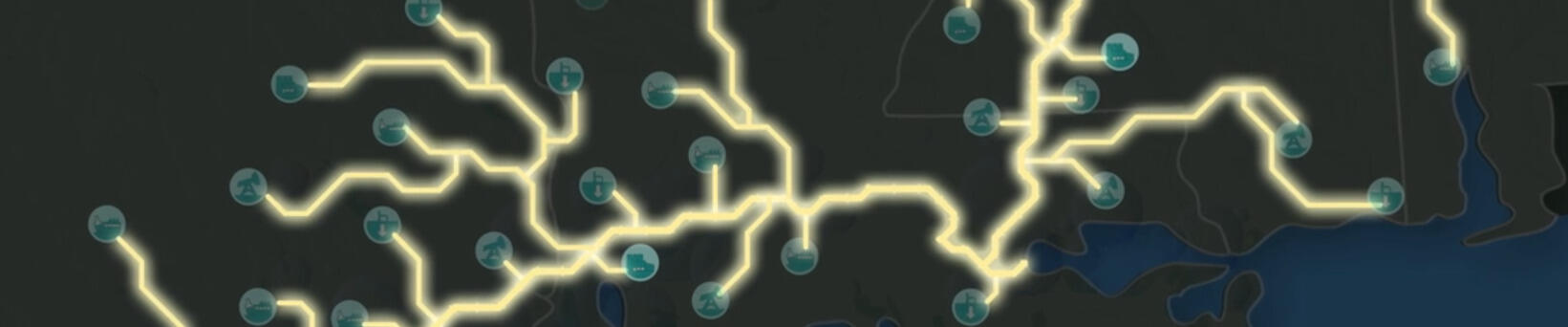
Along the Gulf Coast, we’re developing a different model. We’ve designed a carbon superhighway, an integrated network that connects multiple emitters to multiple storage sites and CO2 customers. This allows for greater flexibility as captured CO2 moves to different endpoints — permanent dedicated storage (Class VI wells), permanent storage via enhanced oil recovery (EOR), or industrial uses (utilization) — all while being checked, measured, and monitored 24/7.
As new capture projects, storage sites, and connectors are added, the system can expand without being rebuilt.
Our carbon superhighway connects customer CO2 emissions to storage. (1:31)
Carbon capture and storage
Explore more
Building trust among Gulf Coast communities as CCS expands
Viewpoints
•
3 min read
• Sept. 22, 2026
Lower-carbon steel and permanent storage: CCS expands across the Gulf Coast
Article
•
2 min read
• Sept. 16, 2026
Expanding our CCS operations in Louisiana with another project startup
Article
•
2 min read
• Feb. 18, 2026
2025: Taking carbon capture and storage from momentum to impact
Viewpoints
•
2 min read
• Jan. 26, 2026
ExxonMobil and BASF join forces to advance low-emission hydrogen through methane pyrolysis technology
Article
•
5 min read
• Nov. 17, 2025
Capture it. Move it. Store it: Three steps for reducing CO2 emissions
Article
•
2 min read
• Aug. 12, 2025