
Texas is home
After careful evaluation, our Board has determined that aligning our legal domicile with our operational home – Texas – benefits both shareholders and the Company, all while preserving shareholder rights.
How to vote Why Texas?
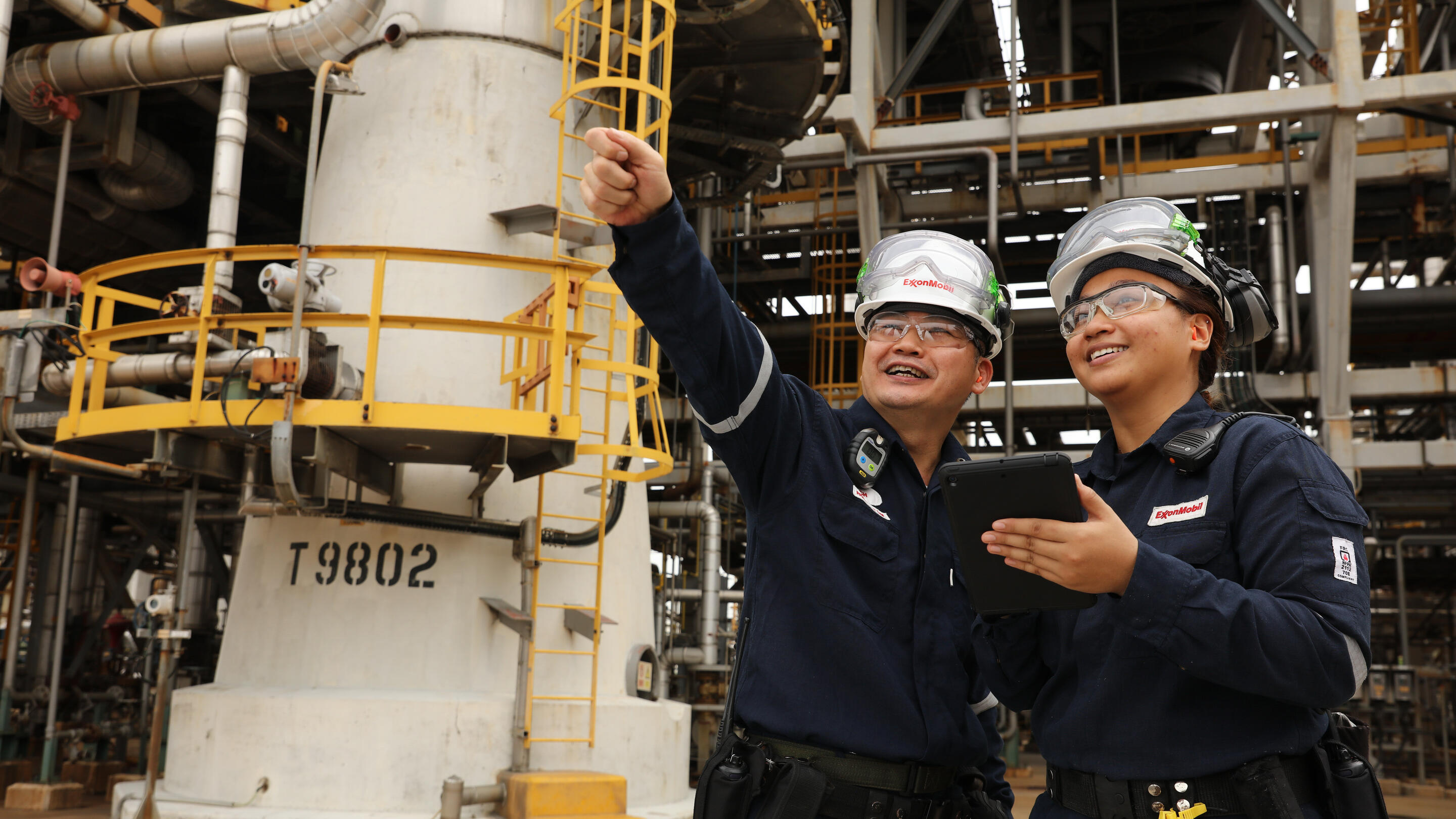
- ExxonMobil moved its headquarters to Texas in 1989 and has operated in Texas for more than 35 years – senior leadership and core business functions are already based there. Almost 75% of the company’s U.S. employees work in Texas.
- Texas is one of the world’s largest economies, supported by a legal and regulatory environment designed to support innovation, job creation, and long-term economic growth.
- Texas courts apply a clear, statute-based approach to corporate affairs – offering consistency and predictability for shareholders and the Company alike.
- This change affects only our state of incorporation. Our commitment to protecting shareholder rights remains unchanged, and we are not adopting any elective provisions of the Texas corporate statute that would weaken the protections shareholders currently have under New Jersey law.
Our track record of success
-
Nearly 30% annualized total shareholder return over five years — leading integrated oil companies (IOCs).1
-
More than $35 billion returned to shareholders in 2025 through dividends and share repurchases.
-
More than $15 billion in structural cost savings since 2019 — more than all other IOCs combined.2
-
Highest average return on capital employed among IOCs since 2019.3
-
$17.2 billion in dividends paid in 2025 — second-largest in the S&P 500.4
The annual meeting of shareholders will be a virtual meeting held on Wednesday, May 27, 2026, beginning promptly at 9:30 a.m. Central Time.
FOOTNOTES:
- 5-year total shareholder returns for period ending December 31, 2025. Total shareholder return compares to each integrated oil company (IOC) peer—BP, Chevron, Shell, and TotalEnergies—as of December 31, 2025. Sourced from FactSet.
- Structural cost savings describe decreases in cash opex excluding energy and production taxes as a result of operational efficiencies, workforce reductions, divestment-related reductions, and other cost-savings measures, that are expected to be sustainable compared to 2019 levels. Relative to 2019, estimated cumulative structural cost savings totaled $15.1 billion, which included an additional $3.0 billion in 2025. ExxonMobil’s $15.1 billion of structural cost savings since 2019 is more than the cumulative structural cost savings reported by all other IOCs combined based on public filings.
- Return on Average Capital Employed (ROCE, return on capital employed) for the Corporation is net income attributable to ExxonMobil excluding the after-tax cost of financing, divided by total corporate average capital employed. ExxonMobil has led IOCs in ROCE when comparing the average of the last 2,3,4,5, and 6 years. Historic ROCE for IOCs is based on public filings and adjusted to a calculation basis consistent with ExxonMobil.
- ExxonMobil’s $17.2 billion of dividends paid in 2025 is the second largest of all S&P 500 companies as per 2025 actuals data sourced from Bloomberg.