Report
6 min read
• May 5, 2026Caring for land and biodiversity
We work under a broad range of natural and socioeconomic settings – and every location is unique.
Report
6 min read
• May 5, 2026Navigate to:
Everywhere we work, we strive to deliver leading environmental performance. The standards and practices we apply around the world often go beyond local legal requirements.
Our operations are in areas that include:
- Forests
- Grasslands
- Marshes
- Deserts
- Aquatic and marine environments
These ecosystems, functioning in a healthy relationship, provide benefits (i.e., ecosystem services) like pollination of crops, food, clean air, and physical and spiritual well-being. The scale of our operations means that we have to consider ecosystems and work to reduce potential impacts to them and the value they provide. Knowing how our activities interact with ecosystems is key to supporting nature and communities.

Our approach
Protect Tomorrow. Today. is our guiding principle, and our Environment Policy details our commitment to continuous efforts to improve environmental performance.
We employ a comprehensive process to understand the connection between our business and the communities and environments where we operate.
- Using our Operations Integrity Management System and Environmental Aspects Guide, we work to understand risks to land and biodiversity and the benefits gained from ecosystems where we operate.
- Our environmental management system helps us identify, mitigate, and monitor potential impacts to any given environment.
- Engagement with academia, industry, community leaders, and others helps us identify relevant biodiversity and ecosystem services.
Our work is also informed by the United Nations Sustainable Development Goals.
Care is a core value. We aim to contribute to the well-being of the communities and environment where we operate. That’s what Care means for us. The way we manage land and habitats, and the biodiversity within them, is critically important to this objective.
We use our Environmental Aspects Assessment (EAA) process to identify, assess, and establish solutions (e.g., potential mitigation measures) across the life cycle of an asset. For major projects, we use our Environmental, Socioeconomic, and Health Impact Assessment (ESHIA) process to evaluate environmental, socioeconomic, and health risks related to land and biodiversity.
As part of our Project Environmental Standards (PES), standards for Land Use and Marine Sound inform how we design our facilities. They help us to:
- Avoid or reduce environmental and socioeconomic impacts related to short- and long-term land use, including lands in critical habitats or with high ecosystem value.
- Identify, assess, and manage risks linked with our work that may produce marine sound, and reliably and effectively implement our mitigation efforts.
Our standards provide guidance for avoiding land use in areas of high “ecosystem services” value or critical habitats.1 Our guidance includes more than a dozen categories for consideration, including statutory protections, impacts from other industrial activities, and importance to Indigenous peoples. To help avoid, reduce, restore, and offset impacts to biodiversity, we follow a biodiversity mitigation hierarchy, and our work is informed by the Cross Sector Biodiversity Initiative. As part of this decision-making process, we look for ways to protect, conserve, or restore ecosystems from the start of a project through the end of an asset’s life, including remediation and restoration.
Through training, we bring our core value of Care to life with our employees. Land and habitat management is emphasized in online training, in-person meetings, and interactive virtual sessions. Online training courses covering sustainability topics have been available to all employees since 2022, including a module to reinforce the importance of our focus areas like "Caring for land and biodiversity." Through December 2025, more than 4,100 employees have completed this module. Some employees receive more training with a deep focus on environmental management, based on their roles.
What are ecosystem services?
Ecosystems are how nature works. From water and air … to plants and animals … to food and raw materials, nature is interconnected and essential for human life.
The concept of ecosystem services links the socioeconomic and environmental settings in each area where we operate. Ecosystem services are the way that nature contributes, both directly or indirectly, to human health and prosperity. These can be complex – like the role of insects in pollinating crops and natural plants. Or they can be as simple as the beauty of natural landscapes that improve spiritual and mental well-being.
We look to assess the significance of our activities and the potential impact those activities might have on ecosystem services – that is, we seek to understand how the ecosystems benefit people and the environment. By identifying the biodiversity and relevant ecosystem services around our sites, our project designs and operational practices can both reduce potential impacts and find opportunities for added benefits.
Operations near protected areas
We check our sites against the World Database of Protected Areas and adjust our business plans as needed to enhance emergency response plans and protective measures. In 2025, 35% of major operating sites2 were within 5 km of designated protected areas on land and 10 km of designated marine protected areas.
The table3 below lists our major operating sites near the following sensitive areas:
- International Union for Conservation of Nature (IUCN) Category I and II protected areas (strict nature reserves, wilderness areas, and national parks).
- Ramsar sites (wetlands of international importance).
- UNESCO World Heritage Sites (natural and cultural).
Major operating site4 |
Protected area name |
Designation / type |
Location |
Facility type |
Country |
|
Long Island Point |
Mornington Peninsula and Western Port Biosphere Reserve |
UNESCO – Man and the Biosphere (MAB) Programme, Ramsar site |
Within 1 km |
Fractionation plant and storage |
Australia |
|
Fawley |
Solent and Southampton Water |
Ramsar site |
Within 1 km |
Petroleum refinery and lube oil blending plant |
United Kingdom |
|
Fife Ethylene Plant |
Firth of Forth |
Ramsar site |
Within 5 km |
Chemical plant |
United Kingdom |
|
Barenburg Operations |
Diepholzer Moorniederung |
Ramsar site |
Within 5 km |
Oil and gas processing |
Germany |
|
Vallejo |
El Tepeyac |
IUCN Cat II |
Within 5 km |
Lube blending plant |
Mexico |
Site-specific strategies
Our work is catered to the needs of each community and ecosystem. We seek opportunities for:
- Research to increase shared knowledge about ecosystems and how they work.
- Engagement and collaboration with local communities, governments, and academia to connect our work with regional strategies.
- Remediation and conservation to bring new life to areas where we operate.
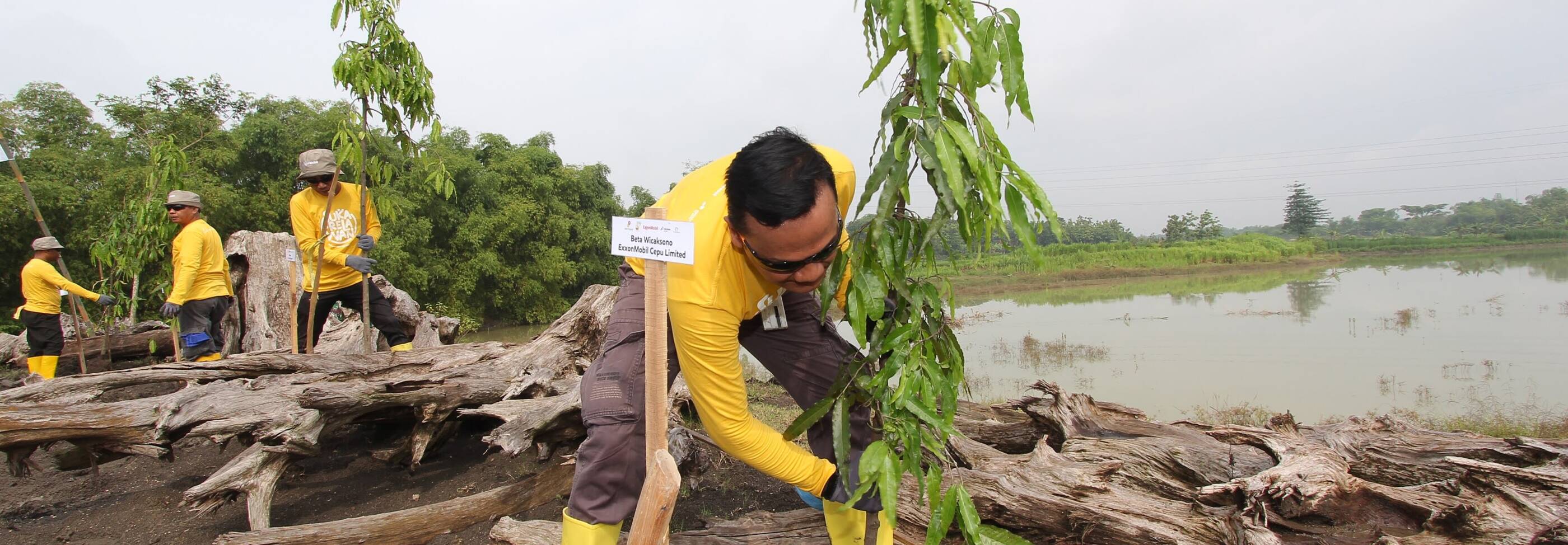
For example, our ecosystem restoration projects can include planting native tree species suited to local conditions. Loblolly pines are native in some areas near our operations – and they typically need less water and long-term care than non-native species. They also provide food and shelter for wildlife, support soil stability, and offer a range of ecosystem benefits.
Before planting begins, restoration sites are carefully planned to ensure appropriate spacing and placement for healthy growth. Over time, progress is tracked by measuring tree health, assessing soil and water quality, and observing the return of native wildlife – key signs of a recovering ecosystem.
spotlight
15 years of ExxonMobil Research Qatar

At the ExxonMobil Research Qatar booth, children explored mangrove ecosystems through an educational space created in collaboration with Dadu.
ExxonMobil Research Qatar (EMRQ) celebrated 15 years of research in support of Qatar’s efforts to protect and restore ecosystems. In 2023, EMRQ transitioned to a center for Nature-based Solutions (NbS). EMRQ works with QatarEnergy LNG, Qatar University, and the Ministry of Environment and Climate Change to define and deploy solutions to help protect, manage, and restore ecosystems.
Mangrove habitats, for example, can provide multiple “co-benefits” such as supporting biodiversity, stabilizing shorelines, and sequestering carbon. Constructed wetlands are another avenue of research, as they can be used for wastewater treatment and reuse.
In 2025, EMRQ collaborated with Dadu, Children’s Museum of Qatar, to develop a STEM program for young learners. The program introduces children to Qatar’s mangroves and coastal ecosystems, turning scientific research into accessible learning.
ExxonMobil Qatar is a founding member of Dadu and the exclusive sponsor of the museum’s Sustainability and Valuing the Environment Gallery, a dedicated space that teaches children about Qatar’s environment and biodiversity.
Spotlight
Ten years of biodiversity management in Papua New Guinea
In 2024, our affiliate in Papua New Guinea (EMPNG) celebrated 10 years of liquified natural gas (LNG) production – and 10 years of contributing to the preservation of biodiversity. EMPNG’s Biodiversity Implementation and Monitoring Program has resulted in the identification and documentation of new species, increased technical capacity of conservation professionals, and resource mapping for conservation planning near upstream operations.
These programs come to life through on-the-ground actions. For example, EMPNG conducted biodiversity surveys to monitor and help protect unique species and habitats. In Papua New Guinea, our affiliate continues to monitor biodiversity in areas near PNG LNG infrastructure to track changes in species diversity and abundance. These surveys help assess any potential impacts from development activities.

Gigira Ridge treefrog (Litoria skeliphoros).

In 2024, EMPNG added more than a dozen survey plots to the plant surveys near Moro and Hides Ridge. Our affiliate also continues to develop Papua New Guinea’s largest “camera trapping” program, with 80 cameras monitoring animals at ground level. Bioacoustic recorders provide additional data, used for monitoring bird and frog populations.
A new species, named the Gigira Ridge treefrog (Litoria skeliphros), was discovered during the 2017 biodiversity survey. Two specimens were found at a single site on Gigira Ridge, a limestone spur in the Hela Province. In 2024, it was scientifically described in a peer-reviewed study and recognized as a new species.
Another previously undescribed species, the Hooded Jewel-babbler (Ptilorrhoa urrissia), was found at Iagifu Ridge. Notably, the species description was developed without the collection of a physical specimen. Instead, it was based on 94 high-quality photographs captured by 11 remote cameras across a 16 hectare area over nearly a decade of monitoring. The findings were published in a peer-reviewed journal.
For a deeper look at how the PNG LNG project, operated by ExxonMobil affiliate Exxon Mobil PNG Limited, is approaching biodiversity and other topics, please refer to the PNG LNG Environment page.
Spotlight
Using eDNA to assess biodiversity in Centreville

Active air sampler used for collecting eDNA.
Environmental DNA (eDNA) is genetic material naturally shed into the environment by living organisms through sources such as skin cells, hair, pollen, and other plant material. By collecting and analyzing eDNA from air and soil samples at the Centreville, Mississippi site, a broad range of species can be detected – often without direct observation or disturbance to the environment.
Air-based eDNA sampling compliments traditional ecological and soil-based assessments, strengthening our ability to understand biodiversity patterns across the landscape.
Two air sampling methods are used:
- Active air samplers draw surrounding air into distilled water, which is then filtered and sent to a lab for analysis.
- Passive air samplers are placed in the field for a set period of time, allowing dust and pollen to collect naturally before being processed and analyzed.
Together, these methods help capture a broad snapshot of biodiversity within an area. This information helps us to make decisions about how we can best manage the land we use and care for the ecosystems around it.
This work supports the ongoing beneficial-use remediation work on the 240-acre site. Other efforts there include:
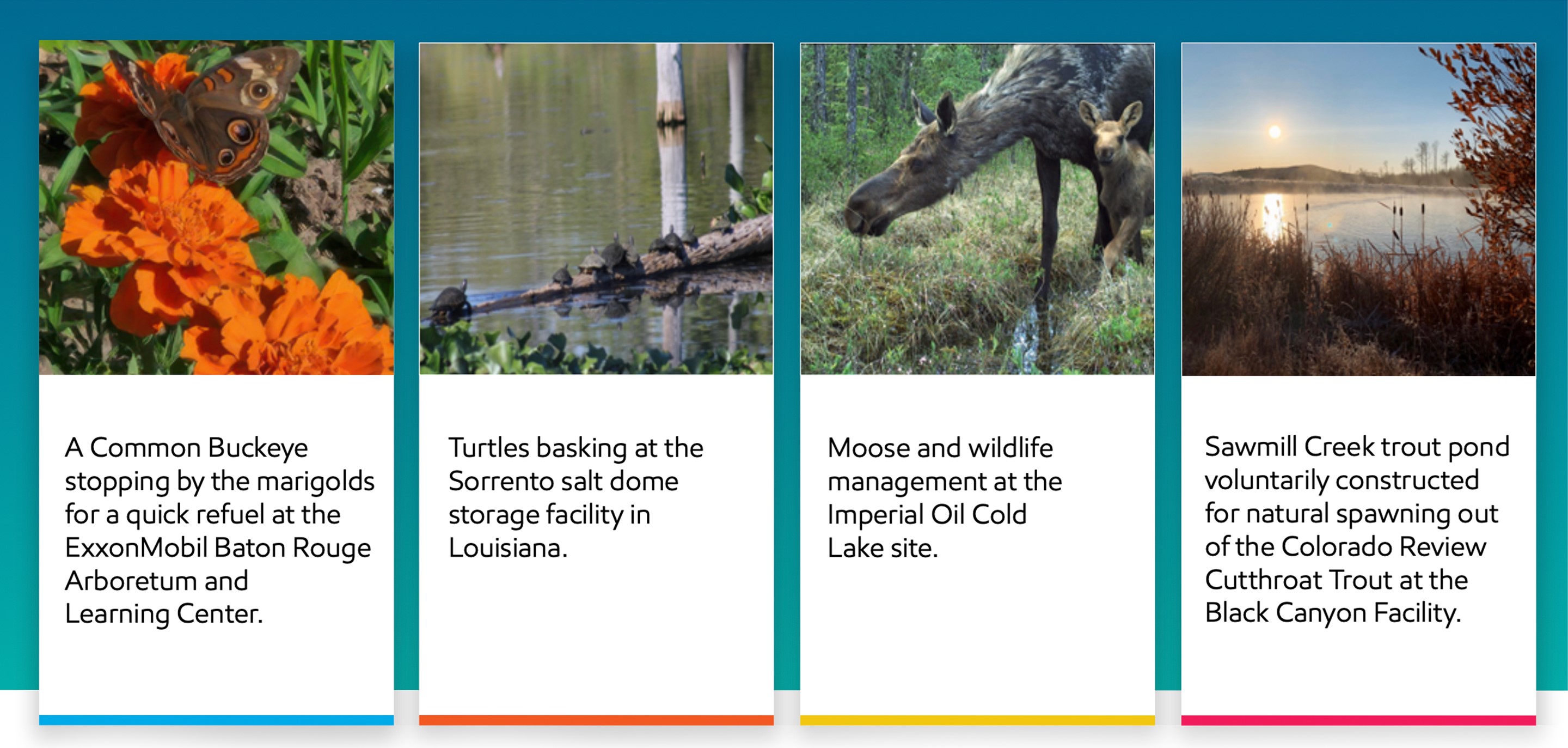
- Achieving WHC Certification®, powered by Tandem Global, a voluntary standard focused on biodiversity enhancement and conservation education activities.
- Advancing land management pilots, including integrated grassland management and pilot reforestation for long-term transition towards native forest conditions.
- Continuing STEM education with the University of Southern Mississippi to support conservation education for teachers and classrooms across the state and beyond.
Spotlight
Armand Bayou Nature Center
Building on 50 years of collaboration, Armand Bayou Nature Center (ABNC), Harris County, and ExxonMobil worked together in a landmark conservation effort to create the largest urban wilderness preserve in Texas.
The agreement adds 1,147 acres, formerly part of the Clear Lake Oil Field, to ABNC’s conservation footprint, including extensive Texas Coastal Tallgrass Prairie and riparian forest along the upper Armand Bayou. These ecosystems play a vital role in flood mitigation, water purification, and carbon sequestration. The preserve is a powerful natural buffer for surrounding communities – just one acre of prairie can absorb 1 to 1.5 million gallons of floodwater and sequester nearly a ton of carbon each year.5
ExxonMobil’s transfer of the property enabled its home county to leverage federal and local grants, while ABNC secured additional funding from private foundations and state environmental programs. This public-private collaboration demonstrates how strategic conservation investments can deliver tangible ecosystem benefits for the region.

Armand Bayou Nature Center.
Working to support biodiversity through strategic collaborations
We work with local education and research institutions, and we participate in community programs to:
- Promote conservation of native species.
- Support field surveys and collection of data.
- Increase awareness and engagement.
- Improve biodiversity management.
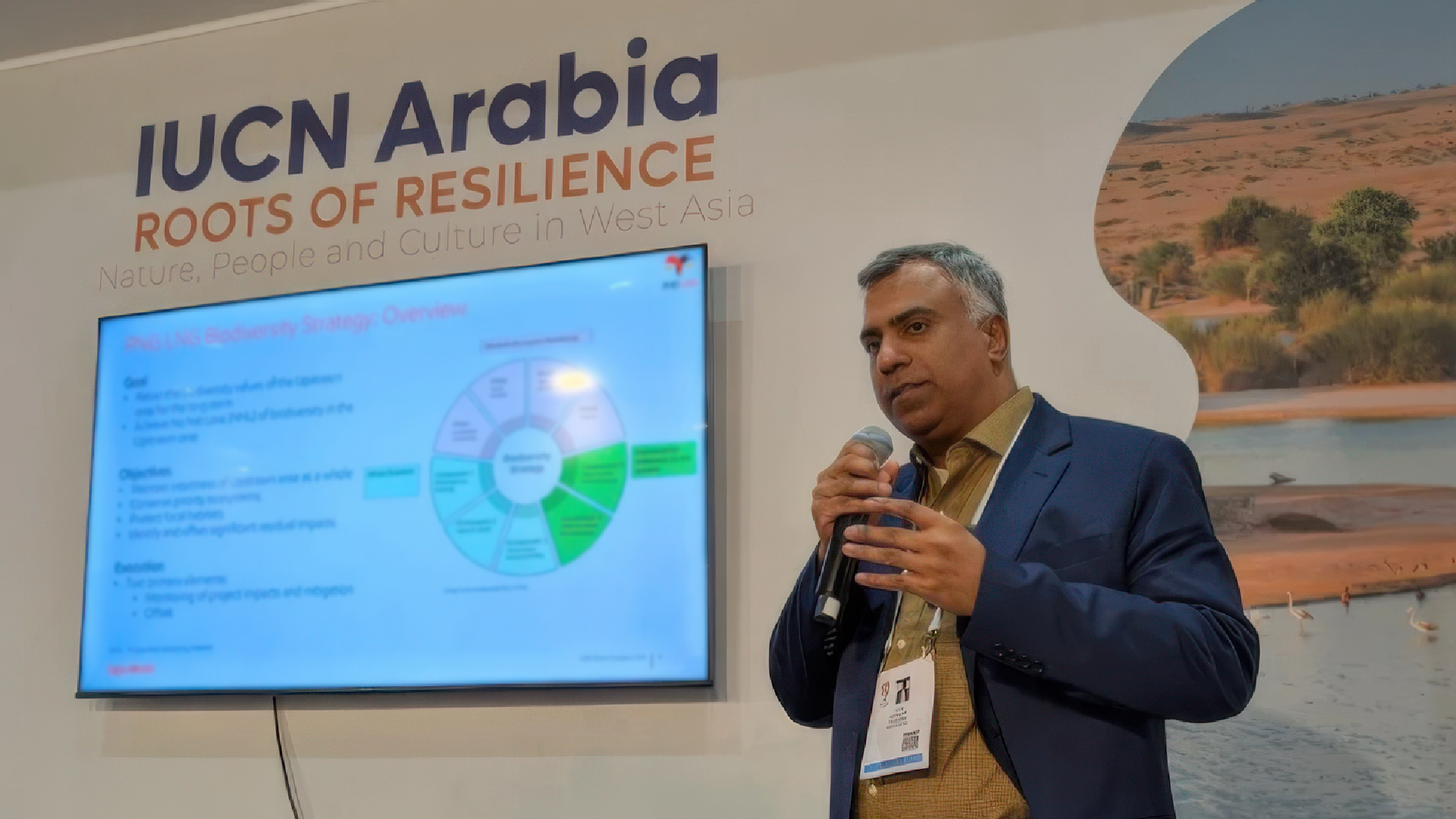
In 2025, we participated in the IUCN World Conservation Congress (WCC) in Abu Dhabi, where we engaged with the conservation and scientific communities at a technical level to share our experience and advance practical approaches to site-level biodiversity management.
Our people participated in Ipieca-led roundtable discussions, a biodiversity and ecosystem services (BES) peer-to-peer workshop, and a marine net positive impact principles workshop.
In Papua New Guinea, our affiliate works with the New Guinea Binatang Research Centre to enhance conservation capacity for practitioners in the country. For example, twenty people have received ranger training in recent years, eleven of which were participants in a historic conservation deed signing in 2023. Biodiversity scholarships take capacity-building to the next level, helping to create a new generation of graduate and post-graduate experts in the region. One of the first recipients, Samson Hege from Eastern Highlands Province, graduated with a master’s in applied chemistry from the PNG University of Technology in 2024 and is now a researcher and lecturer in organic chemistry.
We also support NatureServe in its mission to leverage the power of science, data, and technology to guide biodiversity conservation and stewardship. In 2025, our grant supported improvements to data integration and visualizations to make at risk species information more accessible and usable for land managers and conservation planners.
Spotlight
Supporting wildlife conservation in Brazil

Golden lion tamarin.
Our affiliate in Brazil, ExxonMobil Exploração Brasil Ltda., supports conservation initiatives by helping restore populations of iconic species like the golden lion tamarin.
The golden lion tamarin, a symbol of nature conservation in Brazil, has seen a resurgence thanks to conservation efforts in recent years. Since 2019, our affiliate has allocated more than $1.3 million to the Golden Lion Tamarin Association, whose work has contributed to a near doubling of the tamarin population in the wild from 2,500 in 2019 to 4,800 in the 2023 census. Our affiliate also supports the Golden Lion Tamarin Ecological Park in Silva Jardim, Rio de Janeiro, where they help advance environmental education efforts that engage thousands of ecotourists and local students.
30+ years of habitat conservation with the Wildlife Habitat Council
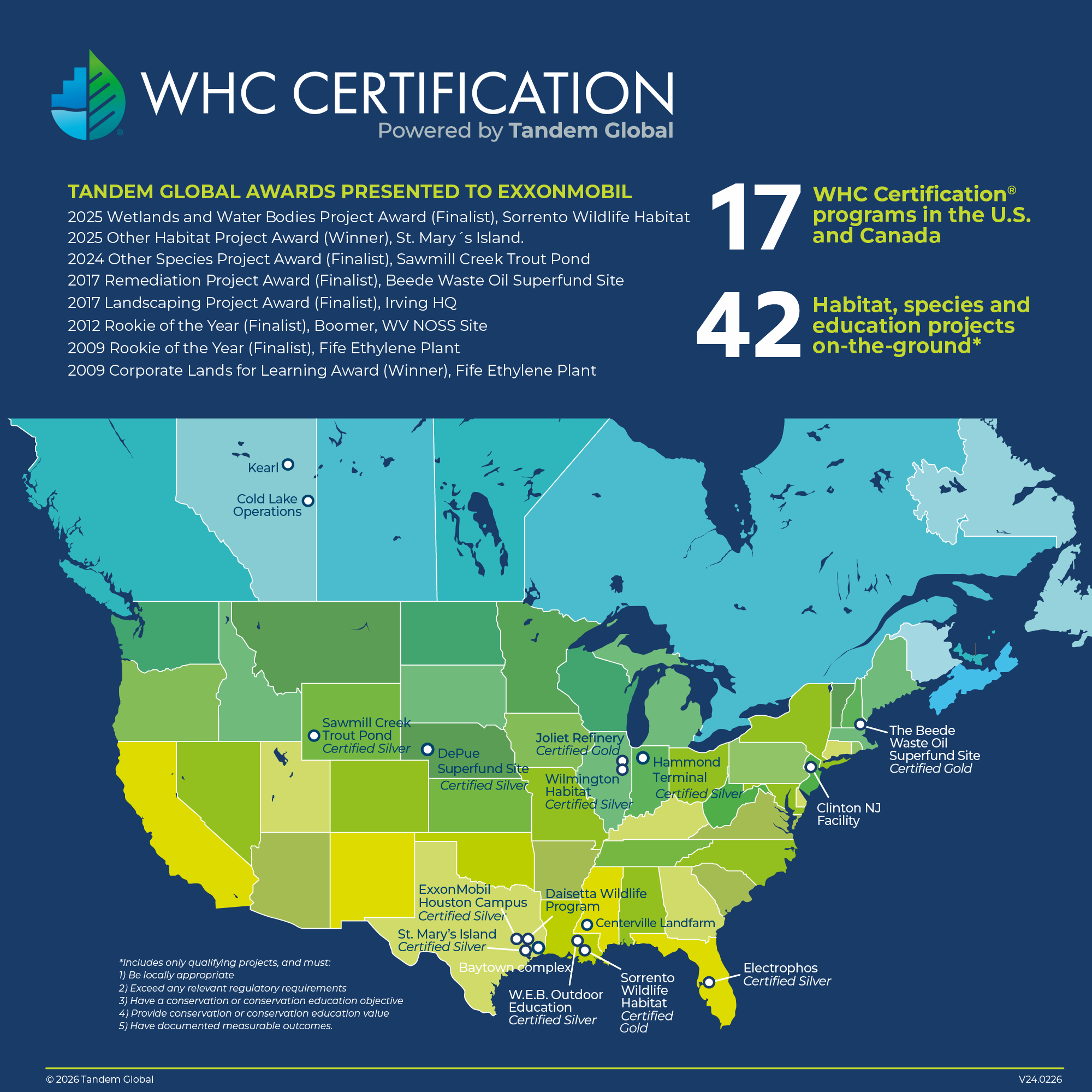
We are a founding member of the Wildlife Habitat Council, which combined with the World Environment Center to form Tandem Global in 2025. For more than three decades, we have worked with the council to promote sustainability, wildlife preservation, biodiversity, and conservation education at our sites. These projects vary from large-scale habitat restoration to community nature outings.
The WHC Certification® is a voluntary standard designed for:
- Broad-based biodiversity enhancement.
- Conservation education activities.
- Corporate landholdings.
In 2025, ExxonMobil Pipeline Company’s Sorrento Salt Dome site in Louisiana moved from Silver to Gold level certification, in recognition of the team’s work to offer education on biodiversity, engage local communities, monitor wildlife progress, and work to improve wildlife habitats. The Sorrento Dome is one of five ExxonMobil Pipeline Company sites to achieve WHC Certification®.
The Joliet Refinery site in Illinois was also recertified at Gold level in recognition of the team’s adaptive management practices to enhance their tallgrass prairie and avian habitats conservation efforts.
-
Pursuing environmental excellence


Publications
Explore more

Content index
Data
•
6 min read
• May 21, 2026
Enhancing process safety
Report
•
3 min read
• May 5, 2026
Leading in personnel safety
Report
•
3 min read
• May 5, 2026About our Advancing Climate Solutions and Sustainability Reports and Cautionary Statement
Report
•
4 min read
• May 5, 2026
Improving air quality
Report
•
2 min read
• May 5, 2026
Integrating sustainability into what we do
Report
•
8 min read
• May 5, 2026
FOOTNOTES:
- Critical habitats, as described by the International Finance Corporation (IFC) Performance Standard 6 (PS6) on Biodiversity Conservation and Sustainable Management of Living Natural Resources (IFC, 2012a), are areas with high biodiversity value, including (i) habitat of significant importance to Critically Endangered and/or Endangered species; (ii) habitat of significant importance to endemic and/or restricted-range species; (iii) habitat supporting globally significant concentrations of migratory species and/or congregatory species; (iv) highly threatened and/or unique ecosystems; and/or (v) areas associated with key evolutionary processes.
- Major operating sites are “operated assets in operational or development phase to include onshore and offshore, oil and gas production facilities, refineries and manufacturing sites, upstream central facilities, and gas plants.” (Sustainability Reporting Guidance for the Oil and Gas Industry (5th edition, 2025) developed by Ipieca, the American Petroleum Institute and the International Association of Oil & Gas Producers).
- Protected Area, Key Biodiversity Area, and Species data reproduced and incorporated under license from the Integrated Biodiversity Assessment Tool (IBAT) (https://www.ibat-alliance.org/). IBAT is provided by BirdLife International, Conservation International, IUCN and UNEP-WCMC. Contact ibat@ibat-alliance.org for further data.
- Major operating sites as of end of reporting year (i.e., December 31, 2025) are included in the table.
- Source: EPA: Functions and Values of Wetlands, page 2.
FORWARD-LOOKING STATEMENT WARNING
CAUTIONARY STATEMENT RELEVANT TO FORWARD LOOKING INFORMATION FOR THE PURPOSE OF THE “SAFE HARBOR” PROVISIONS OF THE PRIVATE SECURITIES LITIGATION REFORM ACT OF 1995 AND OTHER IMPORTANT LEGAL DISCLAIMERS
Images or statements of future ambitions, aims, aspirations, plans, goals, events, projects, projections, opportunities, expectations, performance, potential addressable markets or conditions in the publications, including plans to reduce, abate, avoid or enable avoidance of emissions or reduce emissions intensity, sensitivity analyses, estimates, the development of future technologies, business plans, and sustainability efforts are dependent on future market factors, such as customer demand, continued technological progress, stable policy support and timely rule-making or continuation of government incentives and funding, and represent forward-looking statements. Similarly, emission-reduction roadmaps to drive toward net zero and similar roadmaps for emerging technologies and markets, and water management roadmaps to reduce freshwater intake and/or manage disposal, are forward-looking statements. These statements are not guarantees of future corporate, market or industry performance or outcomes for ExxonMobil or society and are subject to numerous risks and uncertainties, many of which are beyond our control or are even unknown.
Actual future results, including the achievement of ambitions to reach Scope 1 and 2 net zero from operated assets by 2050, to reach Scope 1 and 2 net zero in integrated Upstream Permian Basin unconventional operated assets by 2035, to eliminate routine flaring in-line with World Bank Zero Routine Flaring, to reach near zero methane emissions from operated assets and other methane initiatives to meet ExxonMobil’s greenhouse gas emission reduction plans and goals, divestment and start-up plans, and associated project plans as well as technology advances, including in the timing and outcome of projects to capture, transport and store CO2, produce hydrogen and ammonia, produce lower-emission fuels, produce ProxximaTM systems, produce carbon materials, produce lithium, and use plastic waste as feedstock for advanced recycling; future debt levels and credit ratings; business and project plans, timing, costs, capacities and profitability; resource recoveries and production rates; planned Denbury and Pioneer integrated benefits; detection, measurement and quantification of emissions including obtaining or reporting of that data or updates to previous estimates and progress in sustainability focus areas could vary depending on a number of factors. These include, global or regional changes or imbalances in the supply and demand for oil, gas, petrochemicals, and feedstocks and other market factors; economic conditions and seasonal fluctuations that impact prices, differentials, and volume/mix for our products; new market products and services; future cash flows; our ability to execute operational objectives on a timely and successful basis; the ability to realize efficiencies within and across our business lines; developments or changes in local, national, or international treaties, laws, regulations, taxes, trade sanctions, trade tariffs, or policies affecting our business, such as government policies supporting lower-carbon and new market investment opportunities, or policies limiting the attractiveness of investments such the punitive European taxes on the oil and gas sector and unequal support for different technological methods of emissions reduction or evolving, ambiguous, and unharmonized voluntary and mandatory standards and extraterritorial laws and regulations imposed by various jurisdictions related to sustainability and greenhouse gas reporting and evolving measurement standards for these topics; timely granting of governmental permits, licenses, and certifications; uncertain impacts of deregulation on the legal and regulatory environment; trade patterns and the development and enforcement of local, national and regional mandates; unforeseen technical or operational difficulties; the outcome of research efforts and future technology developments, including the ability to scale projects and technologies such as electrification of operations, advanced recycling, carbon capture and storage, hydrogen and ammonia production, ProxximaTM systems, carbon materials or direct lithium extraction on a commercially competitive basis; the development and competitiveness of alternative energy and emission reduction technologies; unforeseen technical or operating difficulties, including the need for unplanned maintenance; availability of feedstocks for lower-emission fuels, hydrogen, or advanced recycling; changes in the relative energy mix across activities and geographies; the actions of co-venturers or competitors; changes in regional and global economic growth rates and consumer preferences including willingness and ability to pay for reduced emissions products; actions taken by governments and consumers resulting from a pandemic; changes in population growth, economic development or migration patterns; timely completion of construction projects; war, civil unrest, attacks against the Company or industry, and other political or security disturbances, including disruption of land or sea transportation routes; decoupling of economies, realignment of global trade and supply chain networks, and disruptions in military alliances; and other factors discussed here and in Item 1A. Risk Factors of our Annual Report on Form 10-K and under the heading “Factors affecting future results” available under the “Earnings” tab through the “Investors” page of our website at www.exxonmobil.com. The Advancing Climate Solutions Report includes 2025 greenhouse gas emissions performance data as of March 13, 2026, and Scope 3 Category 11 estimates for full year 2025 as of March 13, 2026. The greenhouse gas intensity and greenhouse gas emission estimates include Scope 2 market-based emissions. The Sustainability Report, the Advancing Climate Solutions Report, and combined Executive Summary were issued on May 5, 2026. The content and data referenced in these publications focus primarily on our operations from Jan. 1, 2025 – Dec. 31, 2025, unless otherwise indicated. Tables on our “Metrics and data” page were updated to reflect full year 2025 data. Information regarding some known events or activities in 2026 and historical initiatives from prior years are also included. No party should place undue reliance on these forward-looking statements, which speak only as of the dates of these publications. All forward-looking statements are based on management’s knowledge and reasonable expectations at the time of publication. ExxonMobil assumes no duty to update these statements or materials as of any future date, and neither future distribution of this material nor the continued availability of this material in archive form on our website should be deemed to constitute an update or re-affirmation of these figures or statements as of any future date. Any future update will be provided only through a public disclosure indicating that fact.
See “ABOUT THE ADVANCING CLIMATE SOLUTIONS AND SUSTAINABILITY REPORTS” at the end of this document for additional information on these reports and the use of non-GAAP and other financial measures.
ABOUT THE ADVANCING CLIMATE SOLUTIONS AND SUSTAINABILITY REPORTS
The Advancing Climate Solutions Report contains terms used by the third-party disclosure frameworks. In doing so, ExxonMobil is not obligating itself to use any terms in the way defined or interpreted by any third-party, nor is it obligating itself to comply with any specific recommendation of such parties or to provide any specific disclosure. For example, with respect to the term “material,” individual companies are best suited to determine what information is material, under the long-standing U.S. Supreme Court definition, and whether to include this information in U.S. Securities and Exchange Act filings. The Sustainability Report and Advancing Climate Solutions Report are each a voluntary disclosure and are not designed to fulfill any U.S., foreign, or third-party required reporting framework.
Forward-looking and other statements regarding environmental and other sustainability efforts and aspirations are not intended to communicate any material investment information under the laws of the United States or elsewhere or represent that these are required disclosures in any other context or jurisdiction. These publications are not intended to imply that ExxonMobil has access to any significant non-public insights on future events that the reader could not independently research. In addition, historical, current, and forward-looking environmental, climate-related, and other sustainability-related statements may be based on standards for measuring progress that are still developing, internal controls and processes that continue to evolve, and assumptions that are subject to change in the future, including future laws and rulemaking. Forward-looking and other statements regarding environmental and other sustainability efforts and aspirations are for informational purposes only and are not intended as an advertisement for ExxonMobil’s equity, debt, businesses, products, or services and the reader is specifically notified that any investor-requested disclosure or future required disclosure is not and should not be construed as an inducement for the reader to purchase any product, services, or security. The statements and analysis in these publications represent a good faith effort by the Company to address these investor requests despite significant unknown variables and at times inconsistent market data, government policy signals, and calculation methodologies and reporting standards.
Actions needed to advance ExxonMobil’s 2030 greenhouse gas emission-reductions plans are incorporated into its medium-term business plans, which are updated annually. The reference case for planning beyond 2030 is based on the Company’s Global Outlook research and publication. The Global Outlook is reflective of the existing global policy environment and an assumption of increasing policy stringency and technology improvement to 2050. However, the Global Outlook does not attempt to project the degree of required future policy and technology advancement and deployment for the world, or ExxonMobil, to meet net zero by 2050. As future policies and technology advancements emerge, they will be incorporated into the GIobal Outlook, and the Company’s business plans will be updated as appropriate. References to projects or opportunities may not reflect investment decisions made by the corporation or its affiliates. Individual projects or opportunities may advance based on a number of factors, including availability of stable and supportive policy, permitting, technological advancement for cost-effective abatement, insights from the company planning process, and alignment with our partners and other stakeholders. Capital investment guidance in lower-emission and other new investments is based on our corporate plan; however, actual investment levels will be subject to the availability and attractiveness of investment opportunities, market conditions, stable public policy support, other factors, and focused on returns.
Energy demand modeling is forward-looking by nature aims to replicate integrated dynamics of the global energy system but necessarily involves simplifications to simulate its complexity. The reference to any modeled scenario or any pathway for an energy transition or expansion, including any potential net-zero scenario, does not imply ExxonMobil views any particular scenario as likely to occur. In addition, energy demand scenarios require assumptions on a variety of parameters. As such, the outcome of any given scenario using an energy demand model comes with a high degree of uncertainty. Third-party scenarios discussed in these reports reflect the modeling assumptions and outputs of their respective authors, not ExxonMobil, and their use or inclusion herein is not an endorsement by ExxonMobil of their underlying assumptions, likelihood, or probability. Investment decisions are made on the basis of ExxonMobil’s separate planning process but may be secondarily tested for robustness or resiliency against different assumptions, including against various scenarios. These reports contain information from third parties. ExxonMobil makes no representation or warranty as to the third-party information. Where necessary, ExxonMobil received permission to cite third-party sources, but the information and data remain under the control and direction of the third parties. ExxonMobil has also provided links in this report to third-party websites for ease of reference. ExxonMobil’s use of the third-party content is not an endorsement or adoption of such information.
ExxonMobil reported emissions, including reductions and avoidance performance data, are based on a combination of measured and estimated data. We assess our performance to support continuous improvement throughout the organization using our Environmental Performance Indicator (EPI) manual. The reporting guidelines and indicators in the Ipieca, the American Petroleum Institute (API), the International Association of Oil and Gas Producers Sustainability Reporting Guidance for the Oil and Gas Industry (5th edition, 2025) and key chapters of the GHG Protocol inform the EPI and the selection of the data reported. Emissions reported are estimates only, and performance data depends on variations in processes and operations, the availability of sufficient data, the quality of those data and methodology used for measurement and estimation. Emissions data is subject to change as methods, data quality, and technology improvements occur, and changes to performance data may be updated. Emissions, reductions, abatements and enabled avoidance estimates for non-ExxonMobil operated facilities are included in the equity data and similarly may be updated as changes in the performance data are reported. ExxonMobil’s plans to reduce emissions are good-faith efforts based on current relevant data and methodology, which could be changed or refined. ExxonMobil works to continuously improve its approach to estimate, detect, measure, and address emissions. ExxonMobil actively engages with industry, including API and Ipieca, to improve emission factors and methodologies, including measurements and estimates.
Any reference to ExxonMobil’s support of, work with, or collaboration with a third-party organization within these publications do not constitute or imply an endorsement by ExxonMobil of any or all of the positions or activities of such organization. ExxonMobil participates, along with other companies, institutes, universities and other organizations, in various initiatives, campaigns, projects, groups, trade organizations, and other collaborations among industry and through organizations like the United Nations that express various ambitions, aspirations and goals related to climate change, emissions, sustainability, and an energy transition or expansion. ExxonMobil’s participation or membership in such collaborations is not a promise or guarantee that ExxonMobil’s individual ambitions, future performance or policies will align with the collective ambitions of the organizations or the individual ambitions of other participants, all of which are subject to a variety of uncertainties and other factors, many of which may be beyond ExxonMobil’s control, including government regulation, availability and cost-effectiveness of technologies, and market forces, geopolitical, realignment, conflicts and other risks and uncertainties. Such third parties’ statements of collaborative or individual ambitions and goals frequently diverge from ExxonMobil’s own ambitions, plans, goals, commitments and investments. ExxonMobil will continue to make independent decisions regarding the operation of its business, including its climate-related and sustainability-related ambitions, plans, goals, commitments, and investments. ExxonMobil’s future ambitions, plans, goals commitments, and investments reflect ExxonMobil’s current plans, and ExxonMobil may unilaterally change them for various reasons, including adoption of new reporting standards or practices, market conditions; changes in its portfolio; and financial, operational, regulatory, reputational, legal and other factors.
References to “resources,” “resource base,” and similar terms refer to the total remaining estimated quantities of oil and natural gas that are expected to be ultimately recoverable. The resource base includes quantities of oil and natural gas classified as proved reserves, as well as quantities that are not yet classified as proved reserves, but that are expected to be ultimately recoverable. The term “resource base” is not intended to correspond to SEC definitions such as “probable” or “possible” reserves. For additional information, see the “Frequently Used Terms” on the Investors page of the Company’s website at www.exxonmobil.com under the header “Modeling Toolkit.” References to “oil” and “gas” include crude, natural gas liquids, bitumen, synthetic oil, and natural gas. The term “project” as used in these publications can refer to a variety of different activities and does not necessarily have the same meaning as in any government payment transparency reports.
Exxon Mobil Corporation has numerous affiliates, many with names that include ExxonMobil, Exxon, Mobil, Esso, and XTO. For convenience and simplicity, those terms and terms such as “Corporation,” “company,” “our,” “we,” and “its” are sometimes used as abbreviated references to one or more specific affiliates or affiliate groups. Abbreviated references describing global or regional operational organizations, and global or regional business lines are also sometimes used for convenience and simplicity. Nothing contained herein is intended to override the corporate separateness of affiliated companies. Exxon Mobil Corporation’s goals do not guarantee any action or future performance by its affiliates or Exxon Mobil Corporation’s responsibility for those affiliates’ actions and future performance, each affiliate of which manages its own affairs. For convenience and simplicity, words like venture, joint venture, partnership, co-venturer and partner are used to indicate business relationships involving common activities and interests, and those words may not indicate precise legal relationships. These publications cover Exxon Mobil Corporation’s owned and operated businesses and do not address the performance or operations of our suppliers, contractors or partners unless otherwise noted. In the case of certain joint ventures for which ExxonMobil is the operator, we often exercise influence but not control. Thus, the governance, processes, management and strategy of these joint ventures may differ from those in these reports. ExxonMobil completed the acquisitions of Denbury Inc. and Pioneer Natural Resources Company in 2023 and 2024, respectively. These reports and the data therein do not speak of these companies’ pre-acquisition governance, risk management, strategy approaches, or emissions or sustainability performance unless specifically referenced.
These reports or any material therein are not to be used or reproduced without the permission of Exxon Mobil Corporation. All rights reserved
SUPPLEMENTAL INFORMATION FOR NON-GAAP AND OTHER MEASURES
The Positioned for Growth in a Lower-Emission Future section of the Advancing Climate Solutions Report mentions our assessment of the strength our business and investment portfolio against a range of future outcomes, including third-party scenarios. The Company believes this can be helpful in assessing the resiliency of the business to generate cash from different potential future markets. The performance data presented in the Advancing Climate Solutions Report and Sustainability Report, including on emissions, is not financial data and is not GAAP data.